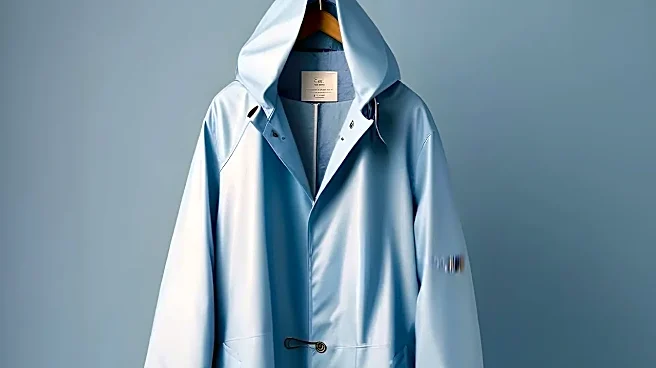

An Innovation Born of Necessity
The story begins not with style, but with a practical problem. In the early 19th century, staying dry often meant wearing heavy, smelly garments stiffened with oil. The breakthrough came in the 1820s from
a Scottish chemist named Charles Macintosh. He patented a method for creating a waterproof fabric by sandwiching a layer of rubber dissolved in naphtha between two pieces of cloth. This new “Macintosh” coat was revolutionary, offering true water resistance. Though early versions had issues with stiffness and odor, the core innovation of a lightweight, impermeable fabric laid the groundwork for modern rainwear. It was the first step in transforming the raincoat from a purely functional object into something more.
From the Trenches to the Streets
The raincoat’s most iconic form, the trench coat, was forged in the crucible of World War I. Thomas Burberry, who had invented a breathable, water-resistant fabric called gabardine in 1879, was commissioned to design a coat for British officers. Lighter and more comfortable than the heavy greatcoats of the era, the trench coat was engineered for life on the front lines. Its signature features were all brutally practical: the epaulets held gloves or rank insignia, the storm flap provided ventilation and protection, and the D-rings on the belt were used to hang equipment like map cases or grenades. After the war, veterans brought the coats home, and the garment seamlessly transitioned into civilian life. It became a symbol of endurance and a sophisticated piece of outerwear that was both stylish and deeply functional.
Hollywood's Enduring Love Affair
If war gave the raincoat its function, Hollywood gave it its soul. On the silver screen, the trench coat became a supporting character in its own right, imbuing its wearers with an aura of mystery, romance, and world-weary cool. Humphrey Bogart cemented its legendary status in Casablanca, his belted trench becoming shorthand for cynical romance. Audrey Hepburn created an unforgettable image of chic desperation when she raced through the rain in one at the end of Breakfast at Tiffany's. From Alain Delon in Le Samouraï to Meryl Streep in Kramer vs. Kramer, the raincoat has been a go-to for directors looking to add a layer of complexity and style to a character. It told a story before a single line of dialogue was spoken, cementing its place in our cultural imagination.
The Ultimate Fashion Chameleon
The final key to the raincoat's longevity is its remarkable versatility. It’s a garment of beautiful contradictions: it can be formal or casual, masculine or feminine, classic or avant-garde. Thrown over a suit, it communicates professional polish. Paired with jeans and sneakers, it’s the definition of effortless weekend style. Its simple, clean lines make it a perfect canvas for designers to reinterpret, yet its fundamental design remains unchanged. Unlike trendy items that demand a specific look, the raincoat adapts to the wearer's personal style, making it feel both timeless and contemporary. It doesn't scream for attention; it commands respect quietly, proving that the most enduring designs are often the ones that blend flawless function with a rich history.