




The Psychology of an 'Empty' Room
In horror, silence is never truly empty. It’s a canvas for sounds that prey on our primal fears. Our brains are hardwired to react to auditory threats—a sudden snap, a low growl—triggering a fight-or-flight response before we even process what we're hearing.
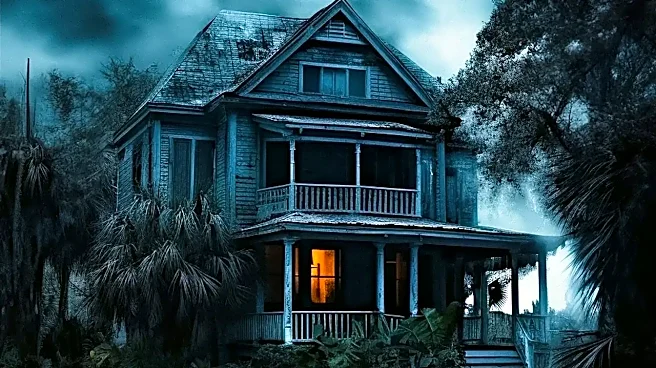
Foley artists are masters of this manipulation. They understand that an empty room in a horror movie isn't supposed to be quiet; it's supposed to be filled with a soundscape of dread. The subtle hum of wind under a door, the drip of unseen water, or the groan of a house settling are all meticulously designed to put you on edge, making the eventual scare a release of tension they built in your subconscious. They weaponize the quiet, turning a simple, static shot of a hallway into a moment of unbearable suspense.
An Orchestra of Everyday Objects
So, how do they create the signature sounds of a haunted house? Not with ghosts, but with groceries and junk. The bone-chilling crunch of a breaking bone is often just a stalk of celery being snapped in half, sometimes wrapped in a leather chamois for a more 'under the skin' feel. That disgusting, wet, squishing sound? It might be an artist squeezing a water-soaked chamois or plunging a hand into a watermelon. The terrifying sound of a knife stabbing flesh was famously created for Alfred Hitchcock's "Psycho" by plunging a knife into a melon. Veteran Foley artist Gary Hecker has used everything from creaky chairs for floorboards to his own voice, pitch-shifted, to create eerie winds. These artists see a room full of props not as junk, but as an orchestra of terror, ready to be performed.
Walking with Ghosts
One of the most fundamental and revealing sounds Foley artists create is footsteps. In a haunted house setting, the sound of a footstep is a complete story. Is it the heavy, determined tread of the hero, performed with heavy boots on a wooden plank? Or is it the slow, dragging shuffle of something inhuman, created by sliding a sand-filled sock across a concrete slab? Foley artists perform these sounds live, watching the screen and embodying the characters, matching their gait, speed, and emotion. They have dedicated 'Foley pits' filled with different surfaces—gravel, dirt, wood, tile—to ensure every step sounds authentic to the environment. The sound of a single, slow footstep in an otherwise silent hall can be more frightening than any monster, and it's the Foley artist’s job to make you feel its weight.
The Unseen Performers
Named after Jack Foley, a pioneer who developed the techniques in the early days of Hollywood, these artists are a unique blend of performer and technician. While sound editors can pull from vast digital libraries for generic noises like traffic or birdsong, Foley is required for the custom, perfectly synchronized sounds that define a character or a moment. The work is physically demanding, requiring artists to perform movements in sync with the actors on screen for hours. They are keen observers, exceptionally tuned into the sonic world and able to think creatively about how to reproduce it. Their art is so effective that, when done right, the audience never even notices it's there; they simply feel it. They create the sounds that make a world feel real, even when that world is designed to be a nightmare.