




Tulle: The Architect of Volume
Think of tulle as the architectural scaffolding of the fabric world. Made from a fine, net-like mesh, its job is to create volume and dramatic, cloud-like silhouettes without adding significant weight. When a designer wants a fairytale ball gown skirt
that seems to defy gravity or the ethereal puff of a ballet tutu, they reach for tulle. Its inherent stiffness, which comes from its hexagonal mesh construction, allows it to be layered endlessly to build shape and structure. You’ll see it used for everything from the iconic pouf of a wedding veil to the voluminous underskirts that give gowns their impressive sweep. While it can be soft, its primary role isn't about drape; it's about building a foundation and creating pure, unadulterated fantasy. Designers have also used it in more modern, rebellious ways, layering it over tailored pants or pairing it with streetwear to play with its traditionally feminine connotations.
Organza: The Sculptor of Crisp Silhouettes
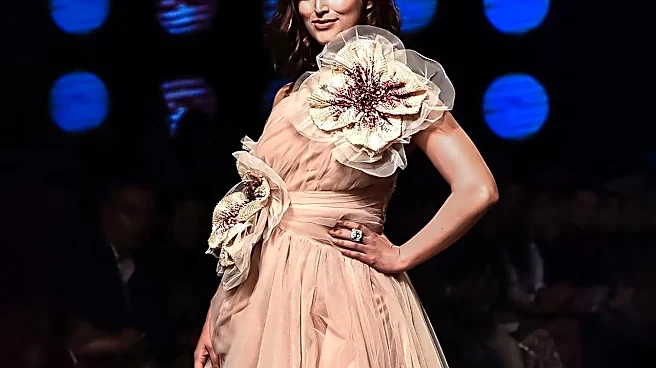
If tulle is the architect, organza is the sculptor. While also lightweight and sheer, organza is defined by its crispness and subtle sheen. Unlike tulle's open netting, organza is a plain-weave fabric, traditionally from silk but now often from synthetics, giving it a smoother surface but a stiffer hand-feel. Its job on the runway is to hold a defined shape, creating structure that stands away from the body. Think of sharp, sculptural sleeves, cascading ruffles that hold their form, or delicate overlays that add a crisp, ethereal layer to a garment. Organza has more body and less drape than chiffon, but more sheen and a less-forgiving crispness. It doesn’t flow; it stands at attention. This quality makes it a favorite for structured eveningwear and bridal gowns where a polished, defined shape is desired. Alexander McQueen's famous "oyster dress," with its hundreds of layered organza circles, is a masterclass in how the fabric can be used to create complex, organic forms.
Chiffon: The Master of Fluid Movement
Chiffon’s purpose is all about movement. While the other two fabrics are used to create shape and volume, chiffon is prized for its soft, fluid drape. It's the most lightweight and delicate of the three, often made from silk or synthetic fibers, and has a slightly rough, matte texture. On the runway, its job is to flow, to trail, and to move with the wearer, creating a soft, romantic, and often Grecian effect. Think of breezy, goddess-like gowns, flowing sleeves that ripple with every gesture, and elegant overlays that skim the body rather than standing away from it. Because it lacks the stiffness of tulle and organza, it doesn't hold a shape on its own. Instead, its beauty lies in its liquid-like quality. It’s the fabric of choice for beach weddings, red-carpet gowns meant to catch the breeze, and any design where effortless grace is the ultimate goal.