

The Souvenir Shop Trap
Let’s be honest: the shell has an image problem. For decades, its primary role in mass-market style was as a shorthand for “I went on vacation.” The souvenir-shop cliché is defined by a lack of interpretation. It’s a literal, often low-quality, shell glued
onto a piece of jewelry, a mirror frame, or a lampshade. The context is purely nostalgic and personal, which is why it so often fails to translate back to everyday life. The puka shell necklace of the early 2000s, for instance, wasn't about appreciating the shell's form; it was about broadcasting a carefree, surf-adjacent identity. This type of embellishment feels dated because its meaning is one-dimensional and tied to a specific, often fleeting, cultural moment.
From Beach to Bijoux
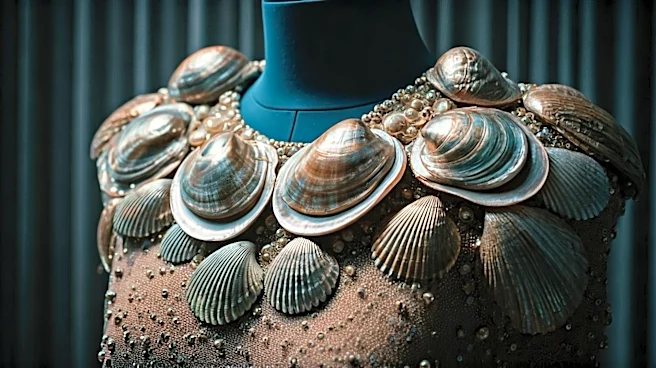
The modern, sophisticated shell embellishment succeeds precisely where the cliché fails: through interpretation and elevation. Today’s top designers aren’t just finding shells; they are re-creating them. Look at the runways. Instead of stringing tiny cowries, designers are casting them in gold or silver, turning a humble object into a piece of precious metal. They are abstracting the form—the sweeping curve of a cockleshell becomes the silhouette of a handbag, or the intricate pattern of a nautilus is transformed into a sculptural earring. Brands like Schiaparelli and Loewe have presented surrealist, gilded shell forms that feel more like wearable art than beachcomber finds. The material and the execution signal intent. It’s not just a shell; it’s an idea about a shell, rendered in materials that command respect.
The Architectural Shell
This thoughtful approach isn't limited to what we wear. In interior design, the shell motif has shed its shabby-chic, coastal-grandma skin for something more architectural and primal. The cliché was to fill a bowl with seashells. The contemporary take is a chair whose backrest mimics the scalloped fan of a Pecten shell, or a fluted wall sconce that evokes its grooved texture. Designers are using shells as inspiration for form and structure, not just surface-level decoration. This “grotto-core” aesthetic plays with scale, turning the humble shell into a monumental presence. A coffee table might rest on giant, sculpted conch legs, or a velvet sofa might have the undulating shape of an oyster. The focus is on the shell’s inherent geometry and beauty, transforming it from a found object into a foundational design principle.
An Ancient, Primal Allure
Why does the shell motif endure at all? Because its pull is ancient and deeply embedded in our cultural psyche. Long before they were vacation trinkets, shells were currency, sacred objects, and symbols of divinity. Think of Botticelli’s Venus, emerging from a scallop shell, an image that forever linked it to beauty, birth, and love. Shells represent a kind of natural perfection; the logarithmic spiral of the nautilus is a famous example of the Fibonacci sequence appearing in nature. They are simultaneously armor and ornament, a home and a jewel. This primal connection is what designers are tapping into. When a shell embellishment works, it’s because it moves past the fleeting memory of a beach trip and connects with this deeper, more universal symbolism of nature’s power, mystery, and perfect geometry.