


The Big Short: The Blueprint
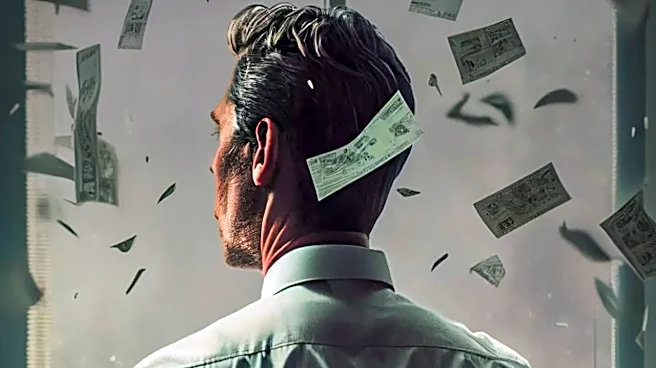
You can’t talk about 'Vice' without mentioning Adam McKay’s own 2015 film, 'The Big Short'. This is where the director first perfected his signature formula. Tasked with explaining the impossibly dry 2008 financial crisis, McKay threw out the rulebook.
The film uses celebrity cameos, like Margot Robbie in a bathtub and Selena Gomez at a poker table, to break the fourth wall and explain complex financial instruments directly to the viewer. Its fast-paced, documentary-style camerawork and cynical but funny tone made a dense topic feel urgent and accessible. It was a trial run for the techniques McKay would later push even further in 'Vice', proving that audiences would embrace a movie that was both an entertainer and a college lecture.
I, Tonya: The Mockumentary Method
Released a year before 'Vice', 'I, Tonya' uses a similar toolkit to tackle a different kind of American scandal. Director Craig Gillespie tells the story of Tonya Harding through a series of contradictory, fourth-wall-breaking interviews. Characters frequently turn to the camera to dispute each other's version of events, creating a funny but unsettling portrait of truth and media narratives. The film blends the gritty feel of a documentary with the polished tragedy of a biopic, all while maintaining a tone of scabrous black comedy. While not explicitly political, its examination of class, abuse, and public perception echoes the 'Vice' playbook of using stylistic flair to deconstruct a well-known, real-life story.
Bombshell: The Corporate Scandal
On the surface, 'Bombshell' is a straightforward drama about the women who exposed Roger Ailes at Fox News. But its execution feels deeply indebted to the McKay style. Screenwriter Charles Randolph, who also co-wrote 'The Big Short', brings a similar sensibility for distilling a complex, recent news event into a compelling narrative. Director Jay Roach employs a docudrama style, complete with characters occasionally breaking the fourth wall to guide the audience through the labyrinthine world of Fox News. The film focuses on the corrosive effects of power and the mechanisms that protect the powerful, themes central to 'Vice'. The result is a film that feels less like a traditional biopic and more like a fast-paced, insider exposé of a toxic corporate culture.
Don't Look Up: The Global Satire
'Don't Look Up' is McKay's most direct successor to 'Vice', applying its loud, abrasive, and star-studded formula to the climate crisis. The film is a blistering satire of political inaction, media triviality, and public apathy in the face of imminent doom. Like 'Vice', it was criticized by some for being smug or heavy-handed, but it uses the same arsenal of techniques: an ensemble cast of A-listers, rapid-fire editing that jumps between storylines, and a tone that swings wildly from slapstick comedy to genuine horror. It's McKay doubling down on his belief that the only way to get audiences to pay attention to a terrifying, complex issue is by shaking them by the shoulders, stylistically and thematically.
Succession: The Prestige TV Descendant
While a TV series, HBO’s 'Succession' is arguably the most successful evolution of the 'Vice' ethos. Adam McKay served as an executive producer and directed the pilot, establishing the show's signature visual language. The series is defined by its handheld, voyeuristic camerawork, with queasy snap-zooms that make viewers feel like they are spying on the hyper-wealthy Roy family. Created by Jesse Armstrong, the show’s origins lie in a screenplay about the Murdoch family, mirroring 'Vice's' fascination with a real-life power dynasty. 'Succession' trades McKay's explicit fourth-wall breaks for a subtler but equally potent satirical lens, blending boardroom politics with brutal family drama to create a darkly comedic portrait of power, wealth, and moral decay in America.