







A Stage for the 'Imagined Community'
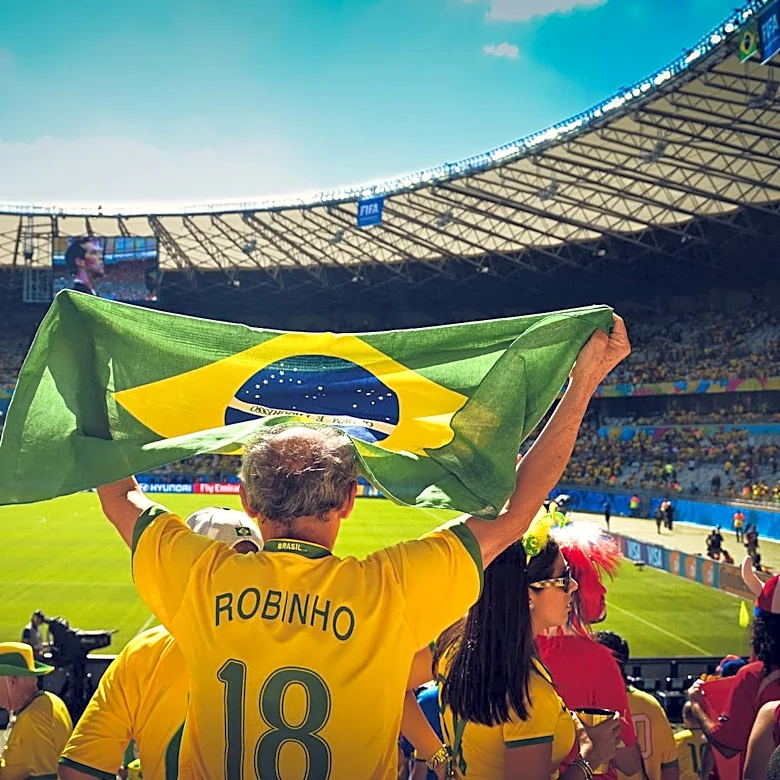
Political scientist Benedict Anderson coined the term “imagined community” to describe a nation: a group of people who feel a deep, horizontal comradeship, even though they will never meet most of their fellow members. For most of the year, this feeling is an abstraction. The World Cup makes it real. Suddenly, you and the stranger next to you on the train, the family across the street, and the people in a city you’ve never visited are all part of the same tribe. You share the same hopes, the same anxieties, and the same uniform. The team on the field becomes a tangible proxy for the nation itself, and their performance provides a simple, dramatic narrative—us against the world—that is incredibly compelling.
Low Stakes, High Emotional Reward
Unlike politics, economics, or war,
the consequences of a soccer match are, in the grand scheme, meaningless. A loss doesn't trigger a recession or a diplomatic crisis. This is precisely what makes it such a perfect vessel for national emotion. It’s a safe space to invest intense feelings of patriotism and tribal loyalty without real-world repercussions. This low-stakes environment allows for pure, unadulterated emotional expression. The collective joy of a winning goal or the shared agony of a penalty shootout loss is a cathartic experience. It’s a release valve for feelings that, in more serious contexts, are complicated and fraught. We get all the emotional highs of belonging and victory, with none of the actual danger.
The Power of Shared Memory
Nations are built on shared stories, and the World Cup is a factory for producing them in real time. These aren't dry historical facts; they are vivid, emotional memories that bind a generation together. Americans still talk about Landon Donovan’s last-minute goal against Algeria in 2010. Italians will forever remember Fabio Grosso’s penalty to win the 2006 final. These moments become national folklore. When your country scores a crucial goal, you know that millions of your compatriots are experiencing that exact same explosion of joy at the exact same second. That synchronized experience creates a powerful, lasting bond. Years later, simply mentioning the moment—“Where were you when…?”—can instantly recapture that sense of unity and pride.
A Universal and Simple Language
Soccer is called “the world’s game” for a reason. Its rules are simple, the equipment needed is minimal, and it’s played and understood from the streets of Rio de Janeiro to the fields of rural Senegal. This universality makes the World Cup a uniquely level playing field. It isn’t dominated by one or two economic superpowers in the way some other global forums are. This accessibility allows for incredible underdog stories that capture the global imagination, like Costa Rica's quarter-final run in 2014 or Morocco's historic semi-final appearance in 2022. For fans of these nations, seeing their country succeed on a stage where they compete as equals with global giants like Brazil, Germany, or France is an immense source of validation and pride. It’s a powerful statement that says, “We are here. We matter.”