







The Child as Audience Proxy
Explaining the nuances of Juneteenth—the two-and-a-half-year delay between the Emancipation Proclamation and the day enslaved people in Galveston, Texas, were finally informed of their freedom—is a tall order for a 22-minute sitcom or a one-hour special.
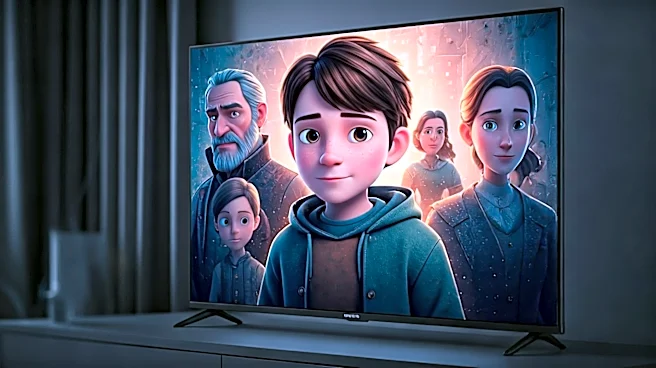
Enter the child character. They are the perfect narrative vehicle for exposition because their ignorance is natural. They can ask the “dumb” questions the audience might have without breaking the flow of the story. The classic example is the landmark “Juneteenth” musical episode of ABC’s *Black-ish*. When Dre Johnson discovers his kids think Juneteenth is just an excuse for a party, their lack of knowledge becomes the engine for the entire episode. Through a series of brilliant, Schoolhouse Rock-inspired musical numbers, the family—and by extension, the viewers—get a vibrant, digestible history lesson. The children aren’t just passive listeners; they are active participants in learning, making the educational component feel earned and engaging rather than preachy.
A Bridge Between Past and Future
Beyond their practical use as an audience stand-in, child characters serve a deeper, more symbolic function in Juneteenth storytelling. They represent the future. The entire point of remembering a painful past is to ensure subsequent generations understand their history and carry its lessons forward. By centering the narrative on a child’s discovery, the story isn’t just about what happened back in 1865; it’s about the unbroken line connecting that moment to the present day. When a young character learns about the resilience and suffering of their ancestors, the history becomes personal. It’s not an abstract event in a textbook but a part of their own identity. This framing transforms Juneteenth from a day of solemn remembrance into a celebration of survival and a promise to the future. The child becomes the living embodiment of the ancestors’ wildest dreams, making the stakes of the story both historical and deeply personal.
Softening a Difficult Truth
Let’s be frank: the history surrounding Juneteenth is brutal. It involves the unimaginable cruelty of chattel slavery and the bitter injustice of freedom delayed. Telling this story honestly without completely overwhelming a family audience is a tightrope walk. A child’s perspective is the key balancing tool. It allows writers to approach the topic with a degree of softness and hope. The story can be filtered through their developing understanding, focusing on core emotions—confusion, sadness, eventual pride—rather than graphic detail. This doesn’t mean sanitizing history, but rather choosing a lens that makes it approachable. For many families, these television episodes are the first time their children will engage with the concept of slavery in a meaningful way. Using a peer character on screen creates a safe, mediated space for that difficult but essential conversation to begin. It allows the narrative to be emotionally resonant without being psychologically crushing, a crucial distinction for primetime television.
The Risk of Oversimplification
Of course, this narrative strategy isn’t without its potential pitfalls. Relying too heavily on a child’s point of view can risk oversimplifying a profoundly complex history. It can flatten the nuances of emancipation, Reconstruction, and the century of struggle that followed. A story designed to be understood by an eight-year-old may not fully satisfy an adult viewer seeking a deeper, more challenging exploration of the topic. Shows like Donald Glover’s *Atlanta*, for example, tackled Juneteenth from a cynical, adult perspective, critiquing the commercialization and performative aspects of the holiday among the Black bourgeoisie. That kind of sharp, satirical commentary would be impossible to channel through a child protagonist. The “secret weapon” is powerful, but it’s just one tool in the storytelling kit. The most robust media landscape is one where child-centric narratives exist alongside complex, adult-focused stories, each serving a different but equally valuable purpose in our collective understanding of American history.