








A Philosophy of Invisibility
From the very beginning, Harry Winston's approach was revolutionary. He believed that traditional jewelry settings, heavy with gold and elaborate metalwork, suffocated the diamonds they were meant to display. His philosophy was simple: the gemstones,
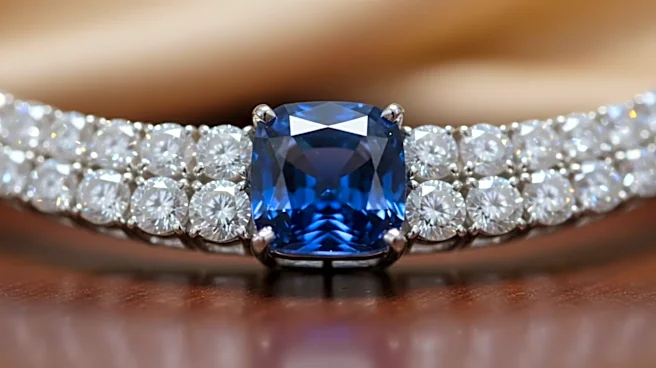
not the metal, should be the star. This guiding principle meant that the craftsmanship is intentionally hidden. The goal is for the platinum settings to be so minimal and discreet that they virtually disappear, allowing the diamonds to appear as if they are floating on the wearer's skin. This commitment to making the structure invisible is the first and most fundamental "hidden detail" that defines every piece that leaves the workshop.
The Genius of the Cluster
The most famous execution of this philosophy is the iconic "Winston Cluster." The story goes that in the 1940s, Mr. Winston was inspired by how snow crystals glistened on a holly wreath on his front door. He saw how the leaves created a three-dimensional shape, with the branches supporting them disappearing into the background. He tasked his designers with recreating this effect with diamonds. The resulting technique involves setting a mix of different diamond cuts—typically pear, marquise, and round brilliant—at various angles to each other. This creates a fluid, sculptural mass of light that moves with the wearer and sparkles from every direction. The metal prongs holding the stones are so fine they are almost impossible to detect, achieving the floating effect he envisioned.
An Architecture of Light
The Winston Cluster isn't just an aesthetic choice; it's a feat of engineering. The seemingly random arrangement of the stones is, in fact, mathematically precise. Each diamond is carefully selected and angled to capture and reflect the maximum amount of light onto its neighbors, creating a whole that is far more brilliant than the sum of its parts. By combining different cuts, Winston's artisans play with how light behaves. The long, elegant flashes from a marquise cut contrast with the fiery, all-over sparkle of a round brilliant. This technique allowed the house to create pieces with the visual impact of a massive single stone by using a collection of smaller, more accessible ones, without ever compromising on brilliance. The result is less a piece of jewelry and more a wearable sculpture of light.
Crafted for the Body
Another hidden aspect of Winston's craftsmanship is the remarkable wearability of its pieces. A massive "Wreath" necklace, composed of hundreds of individual diamonds, is engineered to feel fluid and light, draping on the collarbone as if it were a silk ribbon. This is achieved by linking each small cluster element with minimal, flexible platinum bridges. This dedication to ergonomics is a quiet testament to the brand's artistry. Every ring is custom-made to fit its specific diamond, with signature split-prongs that hold the gem securely while using the least amount of metal possible. It’s a level of detail that ensures the focus remains entirely on the stone's beauty. Even the logo can be part of the structure, with some rings using the "H" and "W" initials as the very prongs that hold the central diamond.