







More Than a Beat
When Bo Diddley’s self-titled debut single hit the R&B charts in 1955, it was unlike anything else on the radio. The song was built around a hypnotic, shuffling rhythm—a raw, percussive force that felt both ancient and futuristic. That beat, a syncopated
pattern with roots in Afro-Cuban clave rhythms, would become his calling card, borrowed by everyone from Buddy Holly to The Rolling Stones. But to focus only on the rhythm is to miss half the story. While other artists of the era were using the recording studio to simply document a live performance, Bo Diddley was one of the first to treat the studio as its own instrument. He wasn't just capturing sound; he was creating it.
The Studio as an Instrument
In the 1950s, the goal for most producers was sonic clarity and realism. The idea was to make a record that sounded like a band playing in a room. Bo Diddley had other ideas. He was a sonic tinkerer, a mad scientist of sound who saw possibilities where others saw limitations. He drenched his guitar in effects that were, at the time, radical and largely unheard of in rock and roll. The shimmering, swampy texture of his guitar wasn't an accident of the recording process; it was a deliberate choice. He used heavy tremolo, a pulsating volume effect, to make his guitar throb in time with the rhythm. He also embraced reverb, giving his recordings a sense of cavernous space that contrasted sharply with the dry, direct sound of his contemporaries.
A Homemade Universe of Sound
A key element to his experimental freedom was his home studio. After moving to Washington, D.C., in the late 1950s, Diddley built a recording studio in his basement. This was practically unheard of for an artist at the time. While his label, Chess Records, was home to his biggest hits, the basement studio at 2614 Rhode Island Avenue NE became his personal laboratory. Freed from the ticking clock and financial pressures of a commercial studio, he could experiment endlessly. It was here he recorded his album "Bo Diddley Is a Gunslinger" and worked with other local artists, including a young Marvin Gaye. Having his own space allowed him to perfect the sounds in his head, rigging multiple tape machines to experiment with stereo and overdubbing long before it was standard practice.
The Diddley Sonic Palette
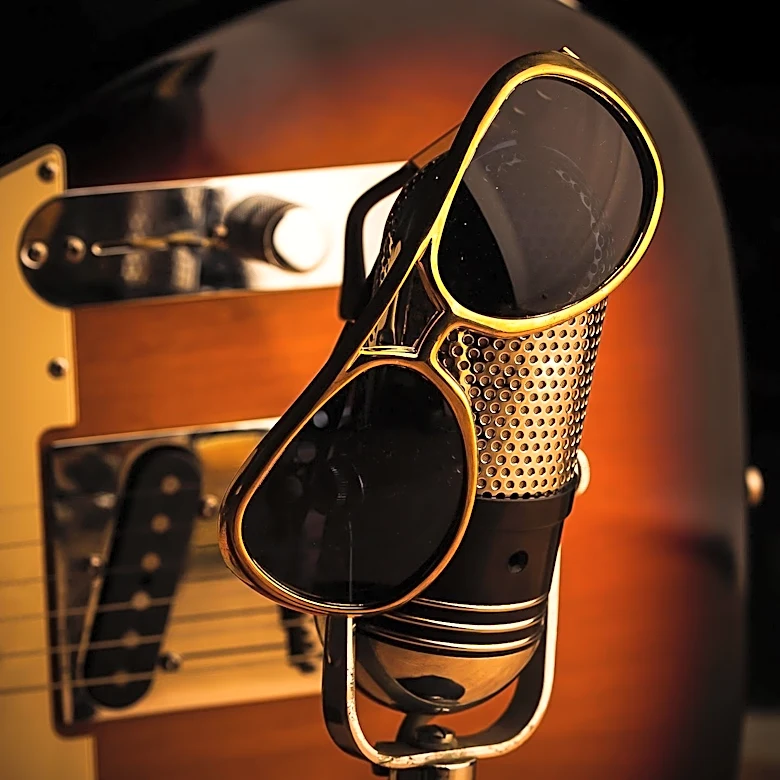
The signature Bo Diddley sound was a cocktail of raw power and cutting-edge technology. His aggressive, percussive guitar playing was run through a DeArmond Tremolo Control pedal, an early effects box that created the throbbing pulse on his classic records. He would then push his amplifier to the verge of breaking up, adding a layer of fuzzy distortion that anticipated the sounds of hard rock and psychedelic music by a decade. This wasn't just noise; it was texture. The combination of the insistent beat, the watery tremolo, and the spacious reverb created a soundscape that was entirely his own. It was gritty, hypnotic, and utterly unique, transforming the electric guitar from a simple melodic instrument into a tool for generating atmosphere and raw energy.
The Echo of Innovation
Bo Diddley's influence is often measured by the artists who copied his beat, but his true impact runs much deeper. He was a trailblazer who demonstrated that the sound of a record could be as important as the song itself. His willingness to experiment with guitar effects, distortion, and studio manipulation laid the groundwork for future sonic pioneers. When you hear the distorted fury of Jimi Hendrix, the atmospheric textures of The Doors, or the swagger of The Rolling Stones, you're hearing echoes of Bo Diddley's innovations. He wasn't just playing rock and roll; he was inventing its vocabulary, pushing the boundaries of what a three-minute record could sound like and what a guitar could do.