




The Golden Rule of Modern Screenwriting
Virtually every blockbuster you’ve seen follows a surprisingly rigid formula known as the three-act structure. Popularized for modern screenwriters by Syd Field, this model divides a story into a simple beginning, middle, and end: the Setup, the Confrontation,
and the Resolution. Act One introduces the hero and their world, then an “inciting incident” kicks off their journey. Act Two is the bulk of the story, where the protagonist faces escalating obstacles in pursuit of a clear goal. Act Three delivers the final showdown and resolves the story’s central question. It’s a powerful, effective formula for creating a tight, two-hour narrative, and it has become the default blueprint for mainstream movies.
Homer’s Meandering Masterpiece
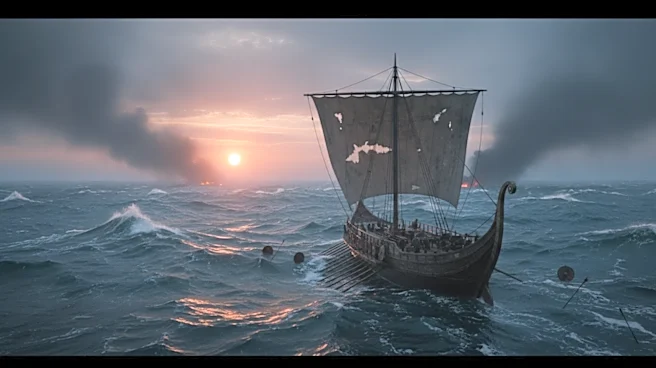
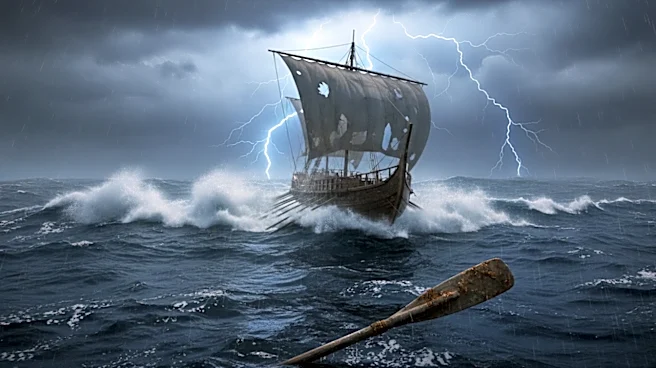
The problem is, The Odyssey couldn't care less about the three-act structure. Homer’s epic is a sprawling, episodic, and gloriously messy narrative. It starts in medias res, or in the middle of things, a decade after the Trojan War has already ended. The hero, Odysseus, doesn't even appear for the first four books; instead, we follow his son, Telemachus, on his own quest. When we finally do catch up with Odysseus, his journey isn't a straight line of rising action. It's a series of disjointed, haunting, and often bizarre episodes—run-ins with witches, monsters, and wrathful gods—many of which are told by Odysseus himself in a lengthy flashback. The poem’s power comes from this very structure: the sense of a long, wearying journey full of detours and dead ends, where the hero is often lost, both literally and figuratively.
Why Cramming It In Never Works
Trying to force this epic into a standard three-act film is like trying to build a ship in a bottle. It's an exercise in reduction. To make it fit, a screenwriter has to start cutting, and the first things to go are the very elements that give the story its scale. The 'Telemachy' is often minimized, severing the crucial father-son theme. The episodic wanderings are condensed into a highlight reel, losing the sense of crushing, decade-long exhaustion. The gods, with their complex motivations, are often reduced to simple plot devices. Past adaptations have struggled with this, either by simplifying the story into a straightforward adventure or by focusing on just one slice of the narrative, as the 2024 film The Return did by concentrating only on Odysseus' homecoming. To make The Odyssey a conventional movie is to strip it of its soul.
Embrace the Episodic
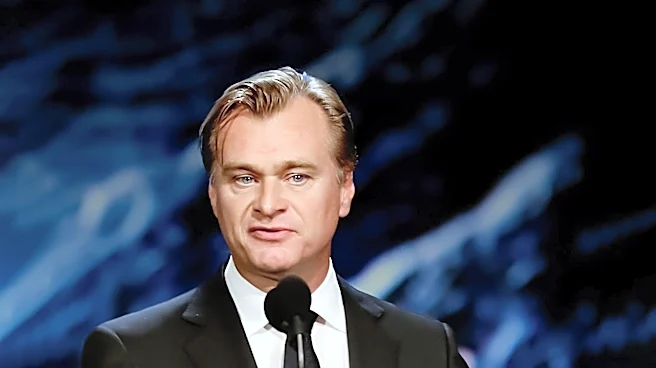
So, what’s the solution? For a story like The Odyssey to work on screen—especially with Christopher Nolan's ambitious adaptation set for a July 2026 release—the filmmakers must break the sacred three-act rule. Instead of condensing, they must embrace the episodic. The ideal adaptation wouldn’t be a single, two-hour film but something more akin to a multi-part epic or a high-budget limited series, allowing each of Odysseus's encounters to breathe as its own self-contained chapter. This approach preserves the non-linear, sprawling feel of the original poem. It allows the narrative to focus on Telemachus for a time, to live in Odysseus’s flashbacks, and to feel the immense passage of time. This structure is no longer foreign to audiences, who have been trained by years of prestige television to follow complex, multi-threaded narratives. To preserve the epic scale, you can’t just tell the story; you have to replicate the feeling of the journey.