







Start with the Core Triangle: Odysseus, Penelope, and Telemachus
Before you try to memorize every suitor or minor deity, ground yourself in the central family. Everything revolves around Odysseus, the king of Ithaca trying to get home after the Trojan War. He's renowned for his cunning and strength but is also defined
by his ten-year struggle to return to his kingdom. Back in Ithaca, his wife, Penelope, is fending off dozens of aggressive suitors who want to take her husband's throne. She is a symbol of loyalty and intelligence, using her wits to delay choosing a new husband. Their son, Telemachus, is a young man on the cusp of adulthood, trying to protect his mother and find news of the father he barely remembers. The first few books of the epic, known as the Telemachy, focus on his coming-of-age journey. If you can keep this family's motivations clear—Odysseus wants home, Penelope wants to preserve it, and Telemachus wants to restore it—you have the foundation for the entire story.
Group the Gods: Team Odysseus vs. Team Chaos
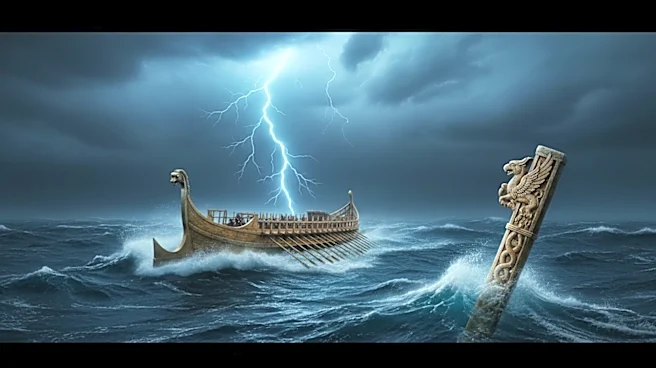
The gods are not just background flavor; they are active players with their own agendas. The easiest way to track them is to know who is for Odysseus and who is against him. On his side is Athena, the goddess of wisdom. She is his divine patron, frequently intervening to guide both him and Telemachus, often in disguise. Zeus, the king of the gods, generally mediates but often rules in Athena's favor. The primary divine antagonist is Poseidon, the god of the sea. He despises Odysseus for blinding his son, the Cyclops Polyphemus, and makes his sea journey a nightmare. Other divine figures like Hermes (the messenger god), Calypso (the nymph who holds him captive), and Circe (the enchantress) serve as important catalysts in his journey, sometimes as obstacles and sometimes as unlikely allies.
Know the Key Supporting Humans
Beyond the gods and the central family, a few key mortals anchor the story across different locations. In Ithaca, watch for Antinous, the most arrogant and dangerous of Penelope's suitors. He is the de facto leader of the men trying to usurp Odysseus's throne. Also important is Eurycleia, the loyal elderly servant who was a nurse to both Odysseus and Telemachus. While Odysseus is on his journey, he encounters several figures who help shape his path. King Alcinous and Queen Arete of Phaeacia, along with their daughter Nausicaä, are crucial for his eventual return home. In the Underworld, he speaks with the prophet Tiresias, who gives him vital instructions for his journey back to Ithaca. He also encounters the spirits of fellow Greek heroes from the Trojan War, like Agamemnon, whose tragic homecoming serves as a dark parallel to Odysseus's own quest.
The Monsters and Obstacles Are Plot Devices
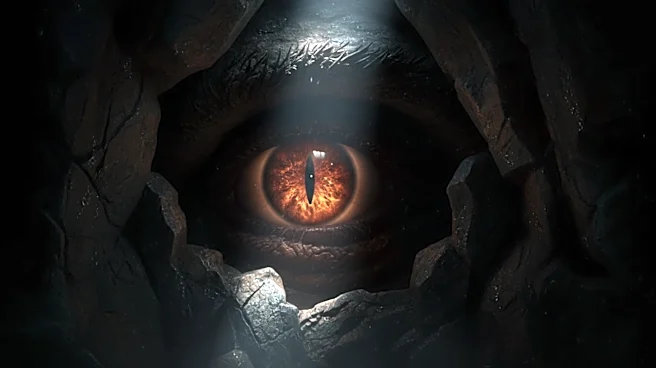
Don't get too bogged down memorizing the backstory of every creature Odysseus faces. Think of them as narrative tests, each designed to challenge a specific aspect of his character. Polyphemus the Cyclops tests his cleverness over brute force. The Sirens test his discipline and foresight. The enchantress Circe, who turns his men into pigs, tests his ability to overcome temptation and magic with help from the gods. Scylla (the six-headed monster) and Charybdis (the whirlpool) represent an impossible choice, forcing him to decide which sacrifice is necessary for the greater good. By viewing these encounters thematically, you can focus on what they reveal about Odysseus rather than getting lost in a bestiary of mythological creatures.
A Simple Viewing Strategy
If you're still feeling lost, try this: for the first few episodes or chapters, focus only on the three members of the House of Odysseus. Once you feel comfortable with their stories, add Athena and Poseidon to your mental map. Then, layer in the suitors as a single group, led by Antinous. Use official character guides or even educational resources as a reference, as many are designed to be spoiler-free primers. By building your knowledge outward from the core conflict, you can appreciate the richness of the massive cast without feeling like you need a spreadsheet to keep up. The story has been captivating audiences for nearly three millennia for a reason—its power lies in its core emotional journey, not just its expansive list of names.