








The Truth That Breaks a Home
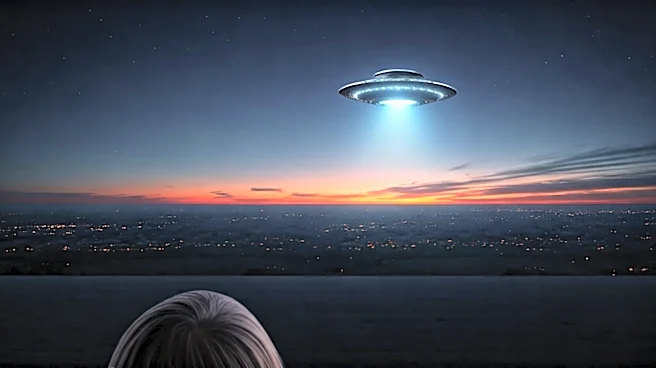
Let’s start with Close Encounters of the Third Kind. On the surface, it’s a story about humanity making first contact. But at its core, it’s a deeply unsettling portrait of a man, Roy Neary, whose brush with the cosmic truth utterly destroys his life.
His pursuit isn't a hobby; it’s an obsession that consumes him, turning him into a stranger to his own family. He sculpts his mashed potatoes, tears up his garden, and becomes emotionally unreachable. The “truth”—a vision of Devils Tower implanted in his mind—costs him his wife and children. When he finally boards the mothership, it’s not a purely triumphant moment. It’s an act of profound abandonment. He gets his truth, his cosmic answer, but the price is the quiet, suburban life he’ll never get back. Spielberg frames it with awe, but the subtext is devastatingly clear: some truths are not meant for everyone, and those who seek them might have to leave everyone else behind.
The Friend Who Has to Leave
Then there’s E.T. the Extra-Terrestrial, a film that single-handedly defined childhood friendship for a generation. The truth for Elliott is a beautiful, telepathic, candy-loving alien in his closet. This knowledge brings him purpose, companionship, and a secret that elevates his lonely, suburban existence. But the film’s central emotional engine runs on the terrible, unspoken fact that this cannot last. The very nature of the truth—that E.T. is an alien—means he must go home. The cost of knowing E.T. is the certainty of losing him. The famous goodbye scene, where E.T. touches his glowing finger to Elliott’s forehead and promises, “I’ll be right here,” is so powerful because it’s a lie born of love. He won’t be right there. He’ll be three million light years away. The film gives Elliott the most profound connection of his life, only to teach him the brutal lesson that some bonds are, by their nature, temporary.
The Love That Was Never Real
Nowhere is the cost of truth more agonizing than in A.I. Artificial Intelligence. The film follows David, a robot boy programmed to love, on a quest for the Blue Fairy, who he believes can make him “real” so his human mother will truly love him back. He is chasing a single, desperate truth. The film’s famously bleak ending delivers the cruelest possible twist. David finds his Blue Fairy, but it’s just a statue at a submerged Coney Island. Then, two thousand years later, hyper-advanced beings grant his wish. They resurrect his mother for one perfect day, using her DNA from a lock of hair. David gets the truth he always wanted: a full day of his mother’s undivided love. But the emotional cost is catastrophic. He knows it’s an illusion, and he knows that when she falls asleep, she will be gone forever. He finds his truth only to learn it was a beautiful, fleeting, manufactured lie, leaving him in a state of eternal, tragic fulfillment.
When the Future Is a Lie
Even in his more action-oriented sci-fi, the theme persists. In Minority Report, John Anderton is a true believer. He is the chief of Precrime, a unit that stops murders before they happen. The system’s infallibility is the central truth of his world. But when the system predicts he will commit a murder, his quest to prove his innocence becomes a hunt for a different kind of truth: the system’s flaw. In uncovering that truth—the existence of “minority reports” where one Precog disagrees—he not only clears his name but shatters the foundation of his society’s justice system. Knowing the truth doesn't just cost him his job or his reputation; it proves his life's work was built on a dangerous lie. He is exonerated, but the perfect world he helped build is dismantled, leaving a more dangerous but honest reality in its place.