






The New York Standard
First, you have to understand the city’s unwritten dress code. Los Angeles is the capital of sun-drenched glamour and spectacle. An LA premiere thrives on bombshell dresses, blinding diamonds, and a healthy dose of theatricality. It’s a performance. New
York, however, operates on a different frequency. The style here is rooted in an intellectual, almost architectural chic. It’s the city of gallery openings in Chelsea, of understated luxury in SoHo, and of editors who treat fashion as a serious art form. At a New York premiere, the goal isn't just to look beautiful; it's to look interesting, smart, and, above all, effortless. Piling on accessories screams 'trying too hard,' a cardinal sin in a culture that prizes the illusion of nonchalant perfection. The cool-girl energy of NYC fashion dictates that your look should feel discovered, not assembled by committee.
A Battle for the Main Character
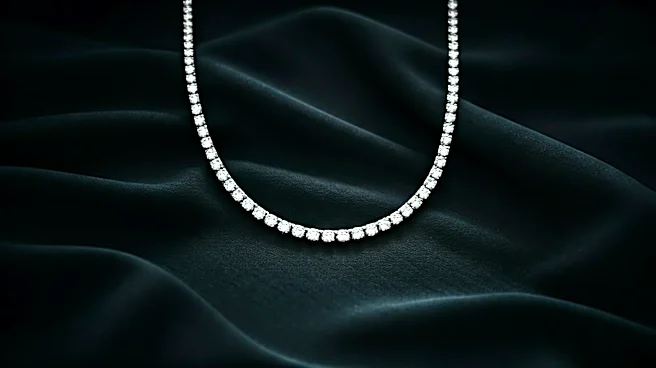
Think of a great outfit as a story with a single protagonist. It could be a gown with a dramatic silhouette, a necklace that could fund a small nation, or a perfectly executed, audacious makeup look. When you over-accessorize, you introduce too many main characters, and the plot is lost. A statement necklace fights with chandelier earrings. A jewel-encrusted clutch competes with a stack of diamond bracelets. The eye doesn't know where to land, and the overall effect becomes visual noise. Instead of looking curated, the outfit appears chaotic and insecure, as if the wearer couldn't decide what to highlight and so chose everything. The most successful red carpet looks are exercises in focus. They choose their hero piece and let everything else play a supporting role. A simple, elegant earring might complement a complex dress, or a bare neckline might cede the stage to a bold lip color. This clarity is what reads as confidence.
The Confidence of 'Enough'
Restraint on the red carpet isn't about a lack of options; it’s the ultimate power move. It signals a deep-seated confidence that doesn't require validation from layers of sparkle. True style icons understand the power of editing. They know when a look is complete. Adding more is often an attempt to compensate for an insecurity—perhaps the dress doesn't feel special enough on its own, or the wearer feels underdressed. But on a high-stakes red carpet, this impulse almost always backfires. A simple, perfectly tailored garment paired with minimal, exquisite jewelry suggests the wearer’s personality is the main event. They aren’t hiding behind their accessories; they are wearing the clothes, the clothes are not wearing them. This philosophy is about subtraction, not addition. It's the quiet assurance of knowing that you, in that dress, are already enough.
Letting the Craftsmanship Breathe
Many garments worn at a film premiere are the result of hundreds, if not thousands, of hours of artistry. They might be haute couture, featuring hand-sewn beadwork, intricate lacework, or an innovative, sculptural design. When you pile on accessories, you risk disrespecting that craftsmanship. A clunky necklace can obscure a beautifully designed neckline. A distracting bracelet can pull focus from delicate embroidery on a sleeve. It’s like hanging a disco ball in the middle of the Sistine Chapel—both might be impressive on their own, but together, they diminish each other. Stylists and celebrities who have strong relationships with design houses know this instinctively. They choose accessories that enhance, not compete with, the garment. The goal is to create a harmonious composition where the dress is honored and the wearer shines, a balance that is immediately thrown off by one too many add-ons.