



An Evolution from Audio to Video
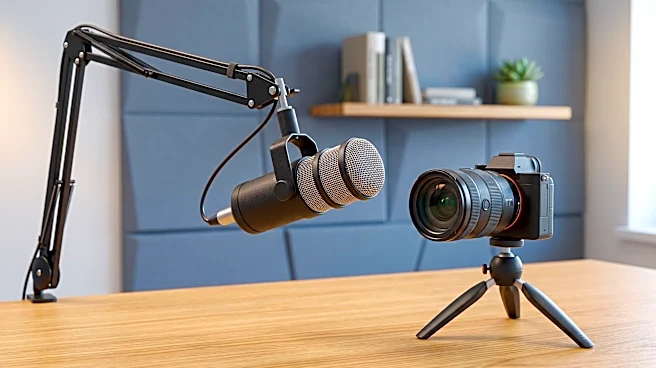
Not long ago, the term "podcast" meant one thing: an audio show you downloaded and listened to. Today, that definition is radically outdated. The pivot to video is no longer a niche trend; it's a core component of the modern podcasting landscape. Major
platforms like Spotify and YouTube have fully embraced video, transforming audience expectations along the way. By early 2026, even Apple Podcasts had integrated video, meaning the entire podcasting infrastructure now treats visuals as a primary feature. This isn't just a creator-led push; it's a response to overwhelming audience demand. Statistics show that younger demographics in particular have embraced the format, with some studies indicating that 90% of Gen Z listeners engage with podcast video content. The logic is simple: watching hosts interact adds a layer of connection that audio alone can't replicate.
The 'YouTube-ification' of Podcasting
Any discussion about video podcasts must center on YouTube. The platform has become the de facto king of podcast consumption, with around 70% of all listeners using it to watch or listen to shows. It surpassed both Spotify and Apple Podcasts as the top destination by attracting over a billion monthly podcast viewers by 2025. This dominance has fundamentally altered how podcasts are made and discovered. Creators know that a video version—even just a static shot of them talking—is essential for discoverability on the platform. Short, shareable clips from video episodes serve as powerful marketing tools on social media, drawing new audiences into the full-length content. This has created a feedback loop: as more viewers consume podcasts on YouTube, more creators prioritize video production, further cementing YouTube's central role in the industry.
An Identity Crisis for Awards Shows
This visual evolution presents a serious challenge for institutions like the iHeartPodcast Awards. The central question becomes: what exactly are we judging? Is a podcast defined by its audio craft or its on-camera charisma? The lines are completely blurred. Consider a category like "Best Production." For a traditional audio drama, that means sound design, mixing, and editing. For a video podcast, it could mean lighting, camera work, and graphic overlays. A show that thrives on YouTube clips might have massive engagement numbers but lack the narrative depth of an audio-only series. The iHeartPodcast Awards, which held its most recent ceremony in March 2026, currently features categories like "Best Comedy" or "Best News" without a specific distinction between audio and video formats. This forces voters and judges into an apples-to-oranges comparison, pitting shows designed for two different sensory experiences against each other.
What's the Path Forward?
The podcasting world is not waiting for awards shows to catch up. The momentum is undeniable, with Spotify reporting that time spent with video content on its platform has more than doubled year-over-year. For the iHeartPodcast Awards to maintain its relevance, it must adapt. One potential route is the creation of new, video-specific categories. Other awards are already doing this; the Critics Choice Association's new Creator Awards, for example, explicitly includes a "Best Video Podcast" category. This would allow for the celebration of visual production excellence without undermining the craft of audio-first creators. Another option is to redefine judging criteria across all categories, requiring judges to consider both the audio and video components of a submission. This would acknowledge the hybrid nature of modern podcasting but could also penalize smaller, audio-only shows that lack the resources for high-quality video. Ultimately, the pressure is on iHeart to make a choice before its next event.