


The Loud Allure of Color Trends
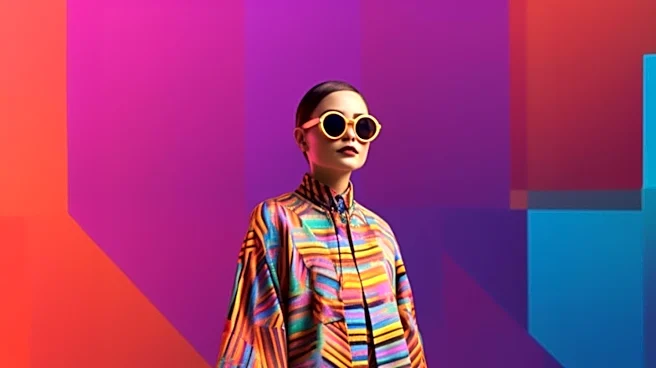
Color trends are easy to love. They’re marketable, instantly recognizable, and offer a simple way to feel current. When a specific shade like 'millennial pink' or 'Gen Z green' takes over, it provides a clear, visual shorthand for what’s in style. Buying
a sweater in the season’s hottest hue feels like an instant update. But that’s also their weakness. Color is often the most fleeting aspect of a trend. Its impact is immediate and psychological—red can feel powerful, blue can feel calm—but its status as a fashion-forward choice is often short-lived. An outfit’s color is surface-level information; you can wear the most popular shade of the year, but if the cut of the garment is from a bygone era, the look will feel dated.
Silhouette: The Silent Architect of Style
Fit and silhouette are the architecture of an outfit. Before our eyes process color or print, our brain reads the overall shape. That outline—the contour of a jacket's shoulder, the width of a pant leg, the placement of a waistline—is what truly defines an era. Think about the most significant fashion shifts of the past two decades. The most dramatic one wasn't a color story; it was the slow, seismic move from the skinny jean to the wide-leg silhouette. For nearly 20 years, the skinny jean dictated everything. Tops were longer to balance the slim leg, and ankle boots were cut low to meet the hem perfectly. When the silhouette flipped to high-waisted, wide-leg pants, it forced a complete proportional rethink. Tops became cropped or tucked, and boots needed a higher shaft to disappear cleanly under the hem. This wasn't just a new item; it was a new way of seeing and styling the entire body.
It’s All in the Details: Rise, Shoulder, and Hem
The power of fit lies in subtle adjustments that have massive ripple effects. The rise of a pant is a perfect example. A high rise elongates the leg and defines the waist, creating a polished feel that pairs well with tucked-in tops. A mid-rise offers a more relaxed, casual baseline, while a low-rise introduces a completely different, nostalgic mood. None of these are inherently better, but shifting from one to another changes the entire outfit's message. Similarly, the evolution of shoulder construction tells a story. The structured, padded power shoulders of the 1980s communicated authority. The soft, sloping shoulders of Dior's 'New Look' in the late 1940s signaled a return to a softer femininity after wartime austerity. Today’s popular oversized, dropped-shoulder fit creates a relaxed, street-inspired feel. These small changes in shape are what anchor a garment in a specific moment in time.
How to Read the Signs and Adapt Your Wardrobe
Tuning into silhouette changes is the real secret to keeping your style feeling modern and intentional. Instead of asking 'What color should I wear?' start asking 'What shape is dominating?'. Pay attention to proportions. Are tops getting shorter? Are trousers getting fuller? You don't need to chase every new shape, but understanding the dominant silhouette helps you make sense of why certain combinations feel 'right' right now. This is also where tailoring becomes your most powerful tool. An inexpensive jacket can look luxurious if the shoulders are perfected and the sleeves are the correct length. Tapering a pant leg or adjusting a waistline can completely transform a piece, aligning it with a more current silhouette. It’s about adapting the principles of fit to your own body and style, creating a look that feels both contemporary and personal.