


The Constant Cutaway
The most common and effective tool in a live editor's arsenal is the cutaway. Ever wonder why you see so many shots of celebrities laughing or tearing up in the audience? It’s not just to show you who's there. A quick cut to a famous face is the perfect
way to hide a multitude of sins. If a presenter stumbles on a line, a piece of scenery is slow to move, or the next winner is taking too long to get to the stage, the director can simply call for a shot of a smiling actor. This buys the crew precious seconds to correct the problem or transition to a different camera angle. To the viewer, it feels like a natural part of the broadcast—capturing the atmosphere of the room—but in reality, it's a masterful bit of misdirection, a visual sleight of hand that keeps the show moving smoothly.
The Power of the Pre-Taped Package
While the Emmys are a live event, they are strategically loaded with pre-recorded segments. These nominee packages, career tributes, and comedy bits are more than just filler; they are islands of predictability in a sea of live chaos. For the production team, these packages are a godsend. Each one is timed down to the exact frame, giving the director a guaranteed block of time to reset the stage, solve technical glitches, or simply give the live crew a moment to breathe. Knowing they have a perfectly polished two-minute segment coming up allows them to handle the unpredictability of an emotional acceptance speech or an unexpected technical issue. These pre-taped moments are the structural pillars that hold the entire live broadcast upright.
The Audio-Led Illusion
One of the more subtle tricks is manipulating the relationship between sound and picture. In editing, these are known as J-cuts and L-cuts. A J-cut is when you hear the audio from the next shot before you see the video. For example, as the host is wrapping up a segment, you might hear the first few words of the winner's acceptance speech before the camera actually cuts to them at the podium. This technique pulls the viewer into the next moment, making the transition feel fluid and motivated. An L-cut is the opposite: the audio from one shot carries over into the next. You might see the winner walking offstage while the applause from their speech continues to roar. Both techniques help blur the hard edges of a cut, making the thousands of edits in a single broadcast feel far more organic and less jarring.
The Rehearsal Safety Net
The real secret to a flawless live show is that it’s not entirely live in spirit. The production team goes through days of intensive rehearsals. Stand-ins for presenters and winners walk the stage, read from the teleprompter, and accept fake awards. During these rehearsals, the director and camera operators map out their shots, and the technical director practices the cuts. They create a detailed “shot sheet” or script for the show, knowing exactly which camera to use at nearly every moment. The live event will inevitably deviate from the plan—speeches run long, cues are missed—but this exhaustive preparation provides a strong foundation. The team's real skill isn't just following the plan; it's knowing it so well that they can improvise seamlessly when things go wrong, instantly finding a backup shot or a new angle that still looks like it was part of the original vision.
The Roaming Camera Rescue
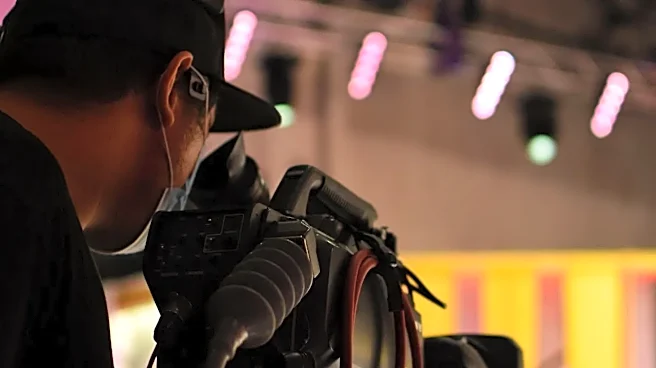
While most cameras at the Emmys are in fixed positions, the Steadicam operators are the roving problem-solvers. These operators, wearing complex camera-stabilizing rigs, can glide through the aisles and around the stage, providing dynamic, cinematic shots. Their mobility is key to capturing spontaneous moments, like a winner hugging their family on the way to the stage. But they also serve as a crucial backup. If a fixed camera's view is suddenly blocked or a technical issue arises, the director can call on a Steadicam to grab a clean shot. What looks like an energetic, swooping camera move might actually be a clever rescue mission, covering a potential on-air mistake with a shot that feels both planned and exciting.