


A King's Last Supper
The scene isn’t in *House of the Dragon*, but in its prequel, *House of the Dragon*. It’s the family supper orchestrated by a dying King Viserys I Targaryen in the episode “The Lord of the Tides.” By this point, Viserys is a walking corpse, his body ravaged
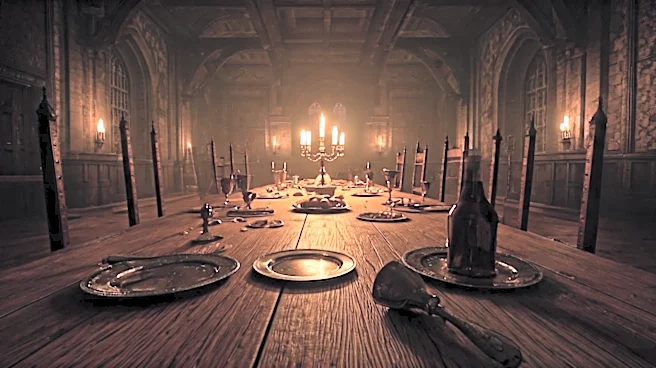
by illness, his face hidden behind a golden mask. With what little strength he has left, he drags himself to the Iron Throne to defend his daughter Rhaenyra’s claim, then gathers his fractured family for one last meal. His goal is simple and desperate: to force his wife, Alicent, and his daughter, Rhaenyra—leaders of the opposing “Green” and “Black” factions—to make peace before he dies. The air is thick with a decade of resentment, bad blood, and simmering ambition. It’s not just a family dinner; it’s a Hail Mary pass to save the entire kingdom from the civil war everyone knows is coming.
The Performance of Unity
For a few fleeting moments, the impossible happens: it works. Spurred by her father’s pathetic, heart-wrenching plea, Rhaenyra raises a glass to Queen Alicent, acknowledging her devotion and care for the king. The room holds its breath. Then, Alicent rises and returns the gesture, toasting Rhaenyra and declaring, “You will make a fine queen.” It’s a stunning détente. The children, now young adults who have inherited their mothers’ hatred, begin to interact. Jacaerys asks Helaena to dance. Laughter, however strained, fills the hall. This is the Targaryen dynasty performing the function it’s supposed to: projecting strength and unity. It’s a beautiful, fragile lie—a glimpse of a peaceful future that might have been, if only the players could forget the past. The tragedy is that in Westeros, no one ever forgets.
The Toast That Burned It All Down
The peace lasts less than an hour. The breaking point comes not from the adults, but from their children, who are living embodiments of their parents' grudges. When a servant places a roast pig in front of Aemond Targaryen, he sees his chance. It’s a cruel callback to a childhood prank where Rhaenyra's sons put a pig in front of him, calling it “the Pink Dread” because he didn’t have a dragon. Now, Aemond—maimed but in possession of the world’s largest dragon—stands to offer a toast. With a smirk dripping with venom, he praises his nephews as “handsome, wise… and strong.” The word hangs in the air, a direct, public accusation that they are not Laenor Velaryon’s sons, but bastards fathered by Harwin Strong. In that single moment, the performance shatters. The brief truce evaporates, swords are nearly drawn, and the kids prove they are incapable of letting go of the grievances the adults just pretended to bury. The future of the realm dies with that toast.
A Microcosm of the Realm's Rot
This is why the scene is so much more revealing than the Red Wedding. The Red Wedding was an act of brutal, calculated betrayal by an outside party, a shocking violation of norms. But this dinner shows the rot from within. The collapse of Westeros isn’t caused by a single villainous act but by the systemic failure of its ruling class to place duty over personal grievance. Viserys’s weakness as a king allowed this poison to fester for years. Alicent’s piety curdled into bitter resentment. Rhaenyra’s entitlement blinded her to the political realities. And their children became the weapons they would use against each other. Aemond’s insult isn’t just teenage cruelty; it’s the inevitable result of a system that prizes blood purity and personal power above all else. The war didn't start when a dragon was killed; it started here, when a family proved it was more committed to its hatreds than its survival.