
The Pace Isn't Slow, It's Strategic
Hockey’s non-stop action is what makes it great. Constant line changes, end-to-end rushes, and few whistles create a sense of organized chaos. Soccer, by contrast, feels like a slow burn. But don’t mistake
a lack of scoring for a lack of action. Think of the long stretches of soccer possession not as boring, but as an extended power play where one team is cycling the puck in the offensive zone. It’s about probing for weaknesses, creating passing lanes, and waiting for one defender to make a mistake. The tension builds through sustained pressure, not just breakneck speed. That sudden pass that splits the defense is the equivalent of a perfect seam pass on the power play—it was built by minutes of patient, grinding work.
Finding Your Favorite Player Archetypes
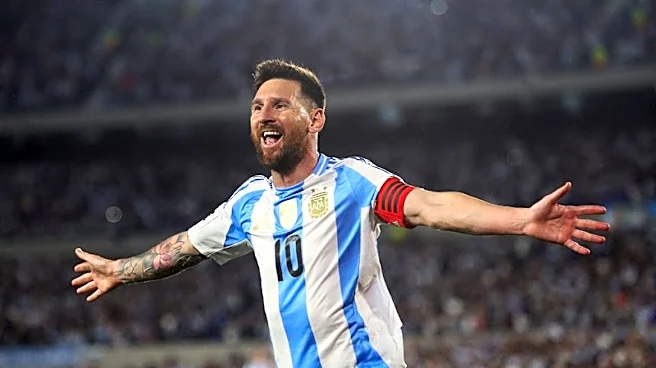
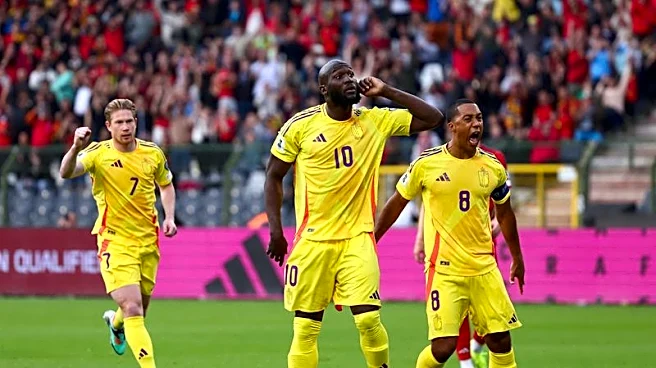
You know the hockey archetypes: the generational playmaker, the pure goal scorer, the two-way beast, the shutdown defenseman. Soccer has direct parallels. Your Lionel Messi or Kevin De Bruyne is the Connor McDavid—a transcendent talent who sees the game in slow motion and creates magic out of nothing. Your Kylian Mbappé is the Nathan MacKinnon—a player whose terrifying speed changes the geometry of the game. A pure goal-scorer like Erling Haaland is your Auston Matthews, possessing an almost supernatural ability to find the net. The “box-to-box midfielder” is your Patrice Bergeron or Aleksander Barkov—a relentless, highly skilled two-way player who dominates every inch of the playing surface. And that towering, no-nonsense center-back? He’s your classic stay-at-home defenseman, clearing the crease and making life miserable for forwards.
The Counter-Attack Is Soccer's Breakaway
The most thrilling moment in hockey is often the short-handed breakaway. It’s a sudden, dramatic reversal of fortune where a team under siege turns defense into a lightning-fast scoring chance. This is the exact spirit of the soccer counter-attack. A team will spend minutes absorbing pressure, defending deep in their own end. They might defend a corner kick (soccer's version of a face-off in the defensive zone) and suddenly, one long clearance finds their fastest forward sprinting into acres of open space. It’s a 3-on-2 or a 2-on-1 rush, with the same heart-in-your-throat feeling as watching a player race in alone on the goalie. When you see a team go from desperately defending their own goal to scoring at the other end in 10 seconds, you’re watching soccer’s version of a perfect penalty kill that ends with a goal.
Offside Is More Than a Line
At first glance, soccer's offside rule seems similar to hockey's: a player can't be ahead of the play. But it’s used far more strategically. In soccer, the defense moves up the field in a coordinated line to actively catch attackers offside. This is called the “offside trap,” and it's a high-risk, high-reward defensive maneuver. Think of it as a team-wide poke check. When it works, it neutralizes a dangerous attack without a single tackle. When it fails, a forward is through on goal with no one to beat. Watching a defensive line step up in perfect unison is like seeing a penalty kill unit perfectly aligned to block every shooting lane. It’s a subtle, beautiful piece of collective intelligence.
Look for the Grinders, Not Just the Stars
Every hockey fan appreciates the fourth-line grinder—the player who blocks shots, wins board battles, and provides the energy that doesn't show up on the scoresheet. Soccer's equivalent is the defensive midfielder, or the “No. 6.” This player’s job is to be an absolute menace. They run relentlessly, break up the other team’s attacks, make crucial tackles, and protect the back line. They are the engine room of the team, doing the dirty work that allows the flashy attacking players to shine. When you watch a game, take your eyes off the ball and focus on the player in the middle of the park who seems to be everywhere, disrupting everything. That’s soccer’s version of a gritty, beloved checking forward, and they are often the true unsung heroes of a championship team.