



The Dawn of the 'American Look'
Before the 1940s, American fashion largely followed Paris's lead. Wealthy women bought French couture, and mass-market brands produced copies. But a new idea was taking root, driven by designers like Claire McCardell who championed a style born from American life.
This wasn't about ornate gowns; it was about functional, stylish clothing for active, modern women. It was about separates you could mix and match, dresses made from comfortable jersey or cotton, and an overall sense of relaxed elegance. With the German occupation of Paris in 1940, the world's fashion epicenter was cut off, giving American designers an unprecedented opportunity to forge their own identity. They seized it, creating what became known as the "American Look": sporty, pragmatic, and democratic.
The War Effort's Fashion Mandate
America's entry into World War II changed everything. Suddenly, fabrics like wool and silk were desperately needed for the war effort—wool for uniforms, silk and newly invented nylon for parachutes. To conserve these vital materials, the U.S. War Production Board (WPB) established General Limitation Order L-85 on April 8, 1942. This wasn't a suggestion; it was a set of strict rules for every garment manufacturer. The goal was to reduce textile use in women's apparel by 15 percent. The order dictated everything from skirt length and circumference to the width of a hem. It was a government-mandated aesthetic designed for total efficiency.
Designing Under a 'Yardstick'
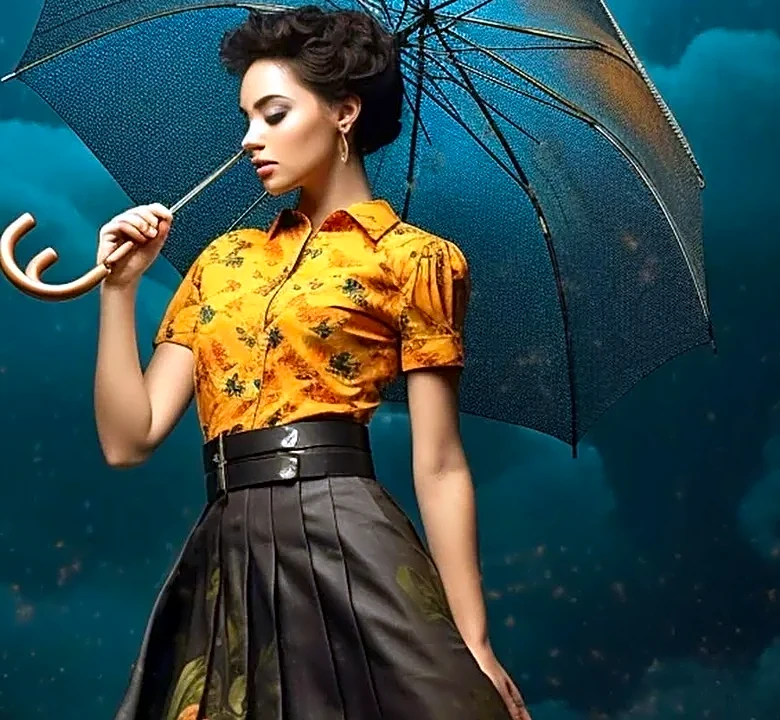
The L-85 regulations were incredibly specific and threatened to stamp out stylistic flair entirely. Pleats, ruffles, and decorative cuffs were forbidden. A dress or coat could have no more than one patch pocket. Hems and belts couldn't be wider than two inches. Even the amount of fabric in a skirt was capped, enforcing a slimmer, shorter silhouette just below the knee. The vision was one of extreme utility, similar to the austere "Utility Clothing" program in Great Britain. For a fashion industry just finding its optimistic, free-wheeling voice, it was a creative crisis. The fear was that American style would become a drab, state-issued uniform, devoid of personality and joy.
How American Ingenuity Won
This is where 1940s sportswear almost looked completely different. Instead of succumbing to the restrictions, American designers treated them as a creative puzzle. The mandate, ironically devised by Neiman Marcus's Stanley Marcus to conserve fabric without forcing radical change, spurred innovation. Designers like Claire McCardell thrived under the constraints, using easily available fabrics like denim and calico to create classics. She invented her famous "Popover" wrap dress—which came with a matching potholder—as a stylish, practical garment that adhered to the rules. Designers focused on clever cuts, unique seam lines, and vibrant patterns to add personality where fabric volume was forbidden. While rationing was real, it was less severe than in Britain, and the American spirit of ingenuity prevailed. Designers didn't just follow the rules; they found ways to make them stylish, preserving the DNA of American sportswear while still contributing to the war effort. The result wasn't a bland uniform, but a testament to creativity under pressure.