








A Dream in a Galaxy Far, Far Away
The story begins not in a shiny Silicon Valley campus, but inside George Lucas’s movie empire in the late 1970s. There, a quiet computer scientist named Ed Catmull assembled a team with a seemingly impossible goal: to make the world’s first feature-length
computer-animated film. This division, called the Graphics Group, was a collection of brilliant minds, including the exuberant Alvy Ray Smith, who shared Catmull's vision. They were pioneers, inventing foundational techniques and dreaming of digital storytelling while their parent company, Lucasfilm, saw them mainly as a tech department for special effects. Their early work, like the groundbreaking “Genesis Effect” sequence in Star Trek II: The Wrath of Khan, was a stunning proof of concept, but their ultimate dream of a full movie remained just out of reach.
Enter the Fallen Prince
By the mid-1980s, financial pressures at Lucasfilm put the Graphics Group on the chopping block. After being turned down by dozens of investors, Catmull and Smith found an unlikely savior: Steve Jobs. Freshly ousted from Apple in 1985, Jobs was a visionary in exile. In 1986, he bought the division from Lucas for $5 million and invested another $5 million to establish it as an independent company: Pixar. But Jobs wasn't a clear hero. Initially, he saw Pixar as a high-end hardware company, selling powerful image computers. The dream of making movies was a costly side project he barely tolerated. For nearly a decade, Jobs poured money into a company that was bleeding cash, at one point considering a sale to Microsoft. This period was Pixar's time in the wilderness, where the original dream was kept alive by a small, dedicated team.
The Messy Road to Triumph
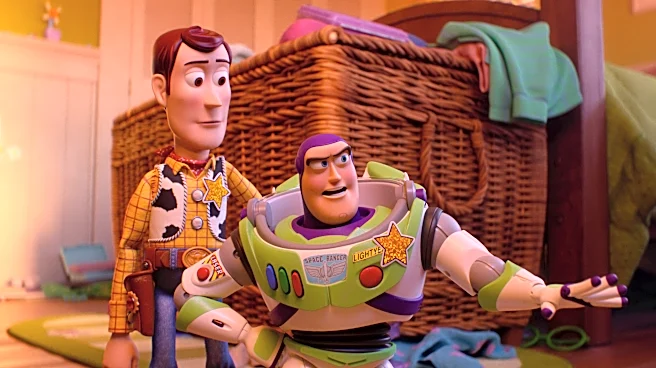
The turning point was a $26 million, three-picture deal with Disney, starting with a film called Toy Story. It was an immense gamble. The technology was unproven for a feature film, and the creative collaboration with Disney was often fraught. The stakes were nothing less than the survival of the company. But there was also internal drama. The official history often glosses over the fact that Steve Jobs’s volatile leadership style clashed with the company's academic roots. This tension culminated in a heated argument between Jobs and co-founder Alvy Ray Smith, leading to Smith’s painful departure in 1991, just before the company achieved its ultimate goal. Smith, a key architect of the dream, was largely written out of the company’s public history for years, a complex, heartbreaking twist rarely mentioned in the simplified tale.
To Infinity and Beyond
When Toy Story was finally released in 1995, it didn't just succeed; it started a revolution. The film was the highest-grossing movie of the year and proved that computer animation could deliver not just technical wizardry, but also deep, emotional storytelling. It saved Pixar, transformed Steve Jobs's legacy, and forever changed the animation industry. Jobs, who had nearly given up, finally embraced the company's true mission and took on an active CEO role. But the real story is more complex than a simple tale of victory. It's a narrative full of clashing egos, near-fatal financial struggles, and broken partnerships. This complexity is perhaps why Hollywood has never fully adapted it. The true story of Pixar isn't a clean, simple hero's journey. It’s a messy, brilliant, and deeply human drama—much like the films it would go on to create.