








It Starts with the Crimp
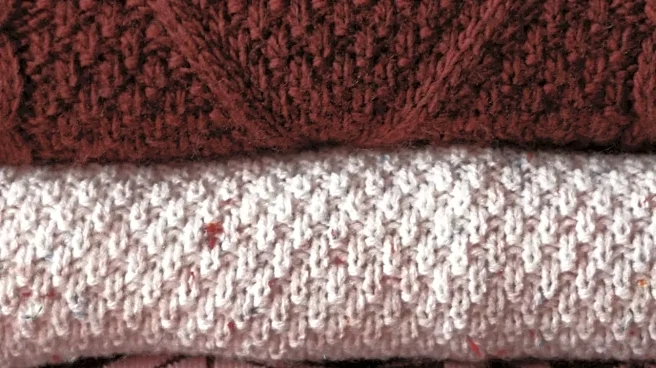
Imagine looking at wool and cotton fibers under a microscope. Cotton fibers are relatively straight and smooth, like tiny, flat ribbons. Wool fibers, on the other hand, are naturally kinky and covered in microscopic, overlapping scales. This three-dimensional,
springy structure is called "crimp." It’s the single biggest reason for the warmth differential. This crimp prevents the fibers from packing down tightly against each other, which is crucial for the next step in creating warmth.
Insulation is About Trapped Air
No fabric is inherently "warm." Insulation works by trapping a layer of air next to your body, which your body heat then warms up. This pocket of still air acts as a buffer against the colder air outside. Wool's crimped fibers are exceptional at creating millions of tiny air pockets. Because the fibers don't lie flat, they create a lofty, voluminous structure that holds onto that insulating layer of air much more effectively than the flatter structure of cotton. A cotton weave, by contrast, has far fewer air pockets, allowing your body heat to escape more easily.
The All-Important Moisture Factor
Here's where wool truly pulls ahead, especially in damp or active conditions. Cotton is hydrophilic, meaning it loves water. It can absorb a lot of moisture, but once wet, the fibers swell and flatten, eliminating any insulating air pockets. It also holds that water directly against your skin, and since water is an excellent conductor of heat, it rapidly pulls warmth away from your body. This is why you've heard the outdoor enthusiast's phrase, "cotton kills." A wet cotton shirt is a fast track to feeling cold and clammy.
Wool's Secret Weapon: It Generates Heat
This is the part that sounds like science fiction, but it's true. Wool is hygroscopic, meaning it actively pulls moisture vapor away from your skin and the surrounding air. When the water molecules bind to the internal structure of the wool fiber, a chemical reaction occurs that releases a small but measurable amount of heat. This process is called "heat of sorption." So, as you begin to sweat or move from a dry room into a humid, cold environment, your wool sweater is literally generating its own warmth to keep you comfortable. Wool can absorb up to 30% of its own weight in moisture without even feeling wet to the touch, all while continuing to insulate.