






The Core Idea: No Cherry-Picking
Let’s start with the most direct comparison. Imagine Giannis Antetokounmpo or Nikola Jokic deciding not to play defense. Instead, they just stand under the opponent’s basket for the entire possession, waiting for a full-court heave from their point guard
for an easy dunk. It would be a ridiculously effective, and game-breakingly boring, strategy. While it’s not explicitly illegal in basketball, it’s considered poor sportsmanship and strategically unsound because it leaves your team playing 4-on-5 on defense. Soccer takes this concept and makes it a formal rule. Offside is, at its heart, a rule designed to stop players from “goal-hanging” or “cherry-picking.” It prevents an attacker from simply parking themselves next to the opposing goalkeeper, completely ignoring the flow of play, and waiting for a long, hopeful pass. Without the offside rule, the beautiful game would devolve into a chaotic series of long-ball punts, destroying all midfield play and tactical buildup.
The 'When' Is Everything, Not the 'Where'
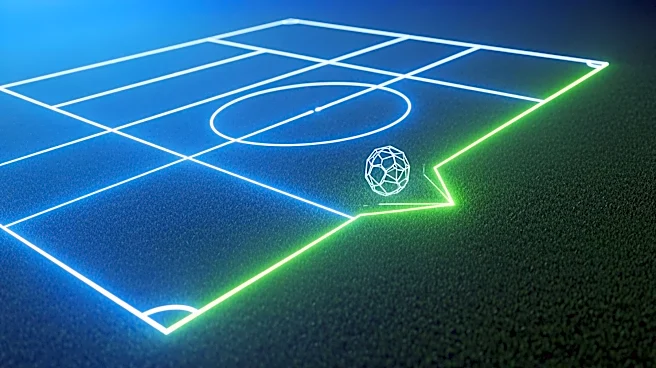
Here’s where most people get tripped up. It’s not illegal to *be* in an offside position. It’s illegal to be in that position at the precise moment a teammate *plays the ball forward* to you. Think of it like this: an NBA player can cut to the basket from anywhere. The key is the timing. If they get a pass for an alley-oop, the pass has to be thrown *before* they are already camping under the rim for three seconds (a three-second violation). In soccer, an attacking player is in an offside position if they are nearer to the opponent's goal line than both the ball and the second-to-last opponent when the ball is played to them. The last opponent is almost always the goalie, so it's really about being past the last defender. The key is your position at the exact millisecond the ball leaves your teammate’s foot. You can run past all the defenders *after* the ball is kicked, and it’s perfectly legal. It’s all about the timing of the run, just like a wide receiver beating a cornerback off the line in football.
The Offside Line as Floor Spacing
In modern basketball, coaches are obsessed with “floor spacing.” You want to spread the defense out to create lanes for driving and opportunities for shooters. Defenses, in turn, want to shrink the floor, get into passing lanes, and keep the offense out of the paint. The offside rule creates a similar dynamic in soccer. Defenses can strategically use the rule by creating an “offside trap.” They will all step forward in a coordinated line right before an attacker is about to receive a pass, intentionally putting the attacker in an offside position. It’s a high-risk, high-reward defensive gamble, much like a basketball team trapping a star player in the corner. On the flip side, offenses are constantly trying to “break the trap” with perfectly timed runs and deceptive movements. The offside rule, therefore, isn’t just a limitation; it’s a tactical battleground that dictates the spacing and rhythm of the entire game.
What 'Interfering with Play' Means
The final layer of confusion for many is that a player can be in an offside position and not be penalized, as long as they don't “interfere with play.” What does that mean? It means they aren’t actively involved. Imagine a basketball player standing in the corner. If a play is happening on the opposite side of the court, that player isn’t really part of the action. But if they receive a pass, or set a screen, or even draw a defender away from the main action, they are now involved. In soccer, if a player is in an offside position but the ball is played to a different, onside teammate on the other side of the field, there’s no foul. The player only becomes “active” when they touch the ball, challenge an opponent for the ball, or clearly obstruct the goalkeeper’s line of sight. This nuance is why you sometimes see players let a ball roll past them, knowing they are offside and hoping an onside teammate can get to it instead.