







The Final Polish on a Legacy
For a player who has won nearly everything, what’s one more trophy? Everything. One final World Cup or continental championship can be the definitive capstone on a historic career. It’s the difference between being one of the greatest and, in the eyes
of many, the greatest. Look no further than Lionel Messi. After leading Argentina to a historic World Cup title in 2022, he returned for the 2026 tournament at age 39. His continued presence wasn't about money or fame; it was about cementing a legacy. That final victory silences debates and elevates a player from superstar to national deity. Modern sports science and meticulous self-care allow players to extend their careers, making these final chapters possible. They’ve learned to adapt their game, trading youthful sprinting for tactical intelligence and lethal efficiency, making them just as dangerous.
Chasing Redemption's Ghost
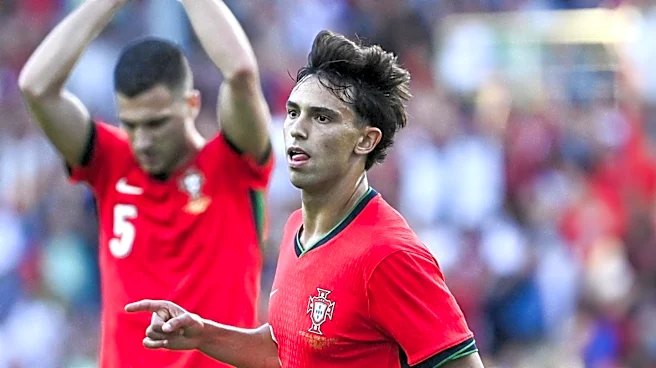
Not all motivations are about adding to a glittering trophy case. For some, the final chase is about redemption. It’s an opportunity to erase the sting of a past failure—a missed penalty, a devastating final loss, or a moment of madness that ended a previous campaign in heartbreak. Cristiano Ronaldo’s journey at recent tournaments has been an emotional rollercoaster, marked by visible frustration and tears, but also by an unyielding drive to perform for Portugal. These moments reveal the immense pressure these icons feel, not just to win, but to right the wrongs of their own history. Every aging star carries the ghosts of tournaments past. A final cup run offers a chance to rewrite a painful chapter and go out on their own terms, replacing a bitter memory with a triumphant one.
An Irreplaceable Adrenaline
Beyond legacy and redemption lies a simpler, more primal motivation: the pure love of the fight. For athletes who have spent two decades at the pinnacle of global competition, the roar of 80,000 fans, the weight of a nation’s hopes, and the thrill of a knockout match are powerful, addictive forces. Retirement represents a quiet stillness that many are not ready to face. Sports psychologists note that the drive to compete doesn't simply vanish with age. As long as an athlete believes they can still contribute at the highest level, the desire to experience that unique adrenaline rush remains. They have dedicated their entire lives to a routine of training, sacrifice, and high-stakes performance. A final tournament isn't just a career choice; it's a way to hold onto a core part of their identity for as long as possible.
A Final Duty to the Flag
For players who transcend their sport, playing for their country is less a job and more a sacred duty. Figures like Croatia's Luka Modrić, whose childhood was shaped by the Croatian War of Independence, play with a ferocious national pride. For Modrić, leading his small nation to a World Cup final and deep into other tournaments was about putting his country on the world map and inspiring a generation that came after him. These players are not just athletes; they are national symbols. The call to lead the team one last time can feel like an obligation they are honored to fulfill. They carry the hopes of their homeland on their shoulders, and the chance to deliver a final moment of collective joy is a motivation that often outweighs the physical toll. It’s a final act of service to the fans and the flag they represent.