







The Cicones: A Bad Start
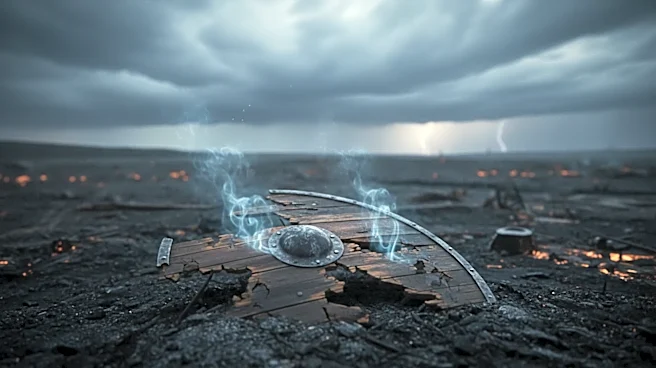
Fresh from victory at Troy, Odysseus and his men made their first stop at Ismarus, land of the Cicones, who were allies of the Trojans. Instead of a peaceful restock, they sacked the city. It was a brutal, shortsighted move. Odysseus urged his men to leave
quickly with their spoils, but they refused, feasting on the beach instead. This delay allowed the Cicones to regroup with inland allies, launching a surprise attack that cost Odysseus six men from each of his twelve ships. It was a bloody lesson in the price of greed and overconfidence, setting a grim tone for the journey ahead.
The Lotus-Eaters: The Danger of Forgetfulness
Thrown off course by a storm, the fleet next landed in the territory of the Lotus-Eaters. This was not a land of monsters, but of a more subtle danger. The inhabitants were peaceful, offering Odysseus’s scouts their signature food: the honey-sweet lotus flower. Those who ate it were overcome with a blissful apathy, losing all memory of home and all desire to leave. They only wanted to stay and eat more lotus. Realizing the danger, Odysseus had to physically drag his weeping men back to the ships and tie them to the benches to get them away, a stark reminder that not all threats carry a sword.
The Cyclops: Brains Over Brawn
Next came the infamous island of the Cyclopes, a race of lawless, one-eyed giants. Driven by curiosity, Odysseus and a dozen of his men entered the cave of Polyphemus, who promptly trapped them inside and began eating them, two by two. Escape seemed impossible. But Odysseus, a hero known for his cunning, devised a plan. He got the giant drunk on strong wine, told him his name was “Nobody,” and then blinded him with a sharpened, heated stake. When Polyphemus cried out for help, he shouted that “Nobody” was hurting him, and the other Cyclopes ignored his pleas. Odysseus and his men then escaped by clinging to the bellies of Polyphemus’s sheep as they were let out to pasture.
Aeolus's Island: So Close, Yet So Far
The crew found a welcome respite on the floating island of Aeolia, home to Aeolus, the keeper of the winds. After a month of hospitality, Aeolus gifted Odysseus a bag containing all the storm winds, leaving only the gentle West Wind free to blow his ships directly home to Ithaca. They sailed for nine days and were so close they could see the shores of home. But while Odysseus slept, his jealous crew, believing the bag was full of gold, opened it. The unleashed winds created a hurricane that blew them all the way back to Aeolia. This time, Aeolus refused to help, believing Odysseus was cursed by the gods.
The Laestrygonians: A Fleet Destroyed
The demoralized crew rowed to the land of the Laestrygonians, a race of giant cannibals. All but one of the ships sailed into the harbor, which was surrounded by steep cliffs. When scouts were sent ashore, they were attacked by the giant king, Antiphates. Thousands of Laestrygonians then appeared on the cliffs and hurled massive boulders down at the fleet, smashing the ships and spearing the men like fish. Odysseus, whose ship had remained outside the harbor, was forced to cut his anchor and flee. He escaped with a single ship and its crew; the other eleven ships and all their men were lost.
Circe's Island: The Sorceress's Test
The lone surviving ship landed on Aeaea, the island of the sorceress Circe. Beautiful and enigmatic, Circe lured a group of Odysseus's men into her palace with an offer of food and wine, then turned them into pigs with her magic wand. Warned by a survivor, Odysseus set out to confront her. On the way, he was met by the god Hermes, who gave him a mythical herb called moly to protect him from Circe's magic. Immune to her spell, Odysseus was able to overpower the sorceress and convince her to turn his men back into humans. His crew ended up staying on her island for a year, living in luxury before she finally helped them on their way.
The Underworld: A Journey Among the Dead
Before he could head for home, Circe instructed Odysseus that he first had to travel to the land of the dead to consult the blind prophet Tiresias. At the edge of the world, Odysseus performed a ritual that allowed the shades of the dead to speak with him. He received crucial prophecies from Tiresias about the dangers ahead, most notably a warning not to harm the sacred cattle of the sun god, Helios. He also had a heartbreaking conversation with the spirit of his own mother, who had died of grief during his long absence.
Sirens, Scylla, and Charybdis: An Impossible Gauntlet
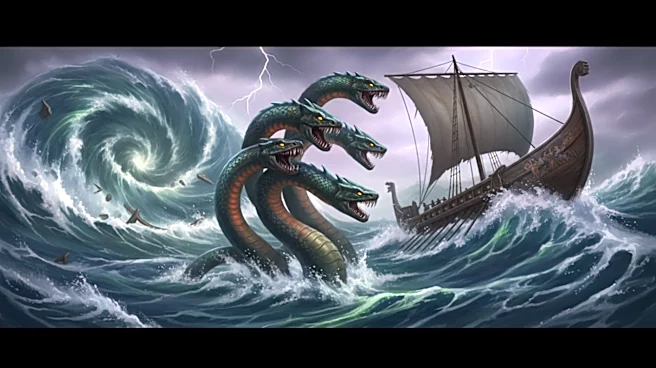
Guided by Circe's advice, Odysseus navigated a series of terrifying obstacles. First were the Sirens, whose enchanting song lured sailors to their deaths on the rocks. Odysseus had his men plug their ears with beeswax while he had himself tied to the mast, allowing him to hear the song without succumbing. Next, they had to pass between two sea monsters: Scylla, a six-headed beast who snatched a sailor for each head, and Charybdis, a giant whirlpool that could swallow an entire ship. Forced to choose the lesser of two evils, Odysseus sailed closer to Scylla, losing six men but saving his ship.
Calypso's Island: The Golden Cage
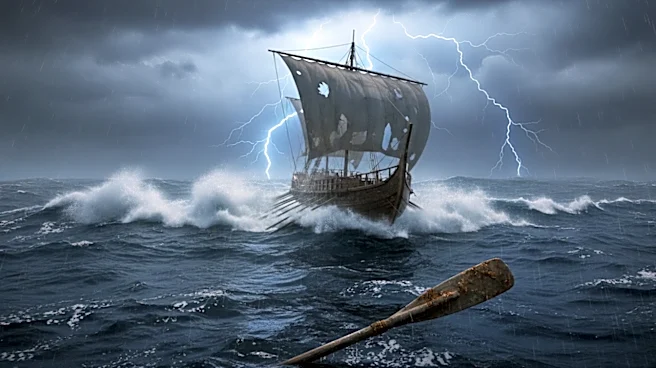
After his men foolishly slaughtered the sun god's cattle, a final shipwreck left Odysseus as the sole survivor, washing ashore on the island of Ogygia. Here, the beautiful nymph Calypso found him and held him captive for seven years, offering him immortality if he would be her husband. Though the island was a paradise, Odysseus spent his days staring out at the sea, overcome with longing for his wife and home. Finally, the gods intervened. Zeus sent Hermes to order Calypso to release him, and she reluctantly helped him build a raft to set sail on the final leg of his journey home.