





The Impossible Question of Intent
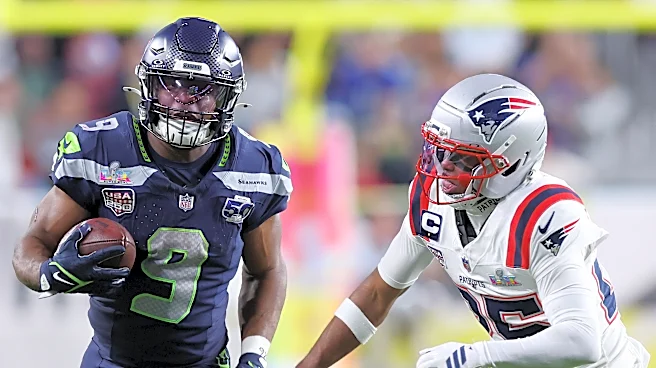
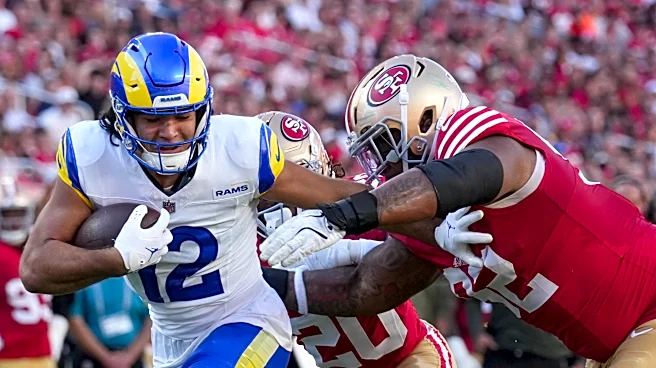
At the heart of both controversies is a simple, yet impossible, question: what was the player trying to do? The NFL rulebook states pass interference requires an act that “significantly hinders” an opponent’s chance to catch a pass. But every fan knows the real debate hinges on whether the defender was “playing the ball” or just “playing the man.” Did he intend to obstruct, or was it just aggressive defense? Officials are asked to be mind readers in a split second. Soccer’s handball rule lives in the same gray area. The official laws from the International Football Association Board (IFAB) have been tweaked endlessly, but the core issue remains. A handball is called if a player “deliberately touches the ball with their hand/arm” or if their hand/arm makes
their body “unnaturally bigger.” That word, “deliberately,” is the kicker. How can a referee, even with video review, know for certain if a player, in a moment of athletic chaos, intended for the ball to strike their arm? This shared burden of judging intent is what makes both calls feel so arbitrary and infuriating.
Unnatural Position vs. Face-Guarding
To get around the problem of judging intent, both sports created proxies for it. In soccer, it’s the concept of a player making their body “unnaturally bigger.” If a defender is sliding with their arms tucked in, a deflection off the bicep might be excused. But if their arm is flailing out to the side, blocking a potential shot? That’s a penalty, regardless of whether they meant to do it. It’s a judgment on body position, not necessarily on thought. This is the direct equivalent of the NFL defender who doesn’t turn his head to look for the ball. Even if he doesn’t overtly grab the receiver, the act of “face-guarding” while the ball is in the air is often flagged for pass interference. Why? Because the league has decided that a player who isn’t trying to play the ball is, by default, intending to interfere with the player who is. In both sports, the rules are forced to punish the posture because they can’t legislate the motive.
The Punishment Rarely Fits the Crime
What truly pours gasoline on these fiery debates are the game-altering stakes. A defensive pass interference penalty in the NFL is not a tidy 15-yard infraction; it’s a spot foul. If the infraction happens 45 yards downfield, the offense gets the ball right there. It can be a drive-saving, game-winning gift that feels wildly disproportionate to the foul itself. Soccer’s version is arguably even more severe. If a handball is called on a defender inside their own penalty area, the result is a penalty kick. This is a one-on-one shot from 12 yards out with only the goalkeeper to beat—an event that results in a goal over 75% of the time in professional leagues. A fleeting, perhaps accidental, touch of a forearm can be punished with a near-certain goal. This extreme consequence turns every borderline call into a moment of high drama and potential injustice, ensuring that fans and commentators will dissect it for days.
Video Review: The Problem, Not the Solution?
Both sports hoped technology would bring clarity. The NFL introduced instant replay challenges for pass interference, while soccer implemented the Video Assistant Referee (VAR) system. The result? The arguments just moved to a studio. Instead of ending debates, video review often prolongs them, shifting the focus from a real-time judgment to a forensic, frame-by-frame analysis of whether a fingertip grazed a jersey or if an arm was three inches further from the torso than it “should” have been. VAR and replay haven't eliminated subjectivity; they’ve just put it in slow motion. The technology gives officials more angles to second-guess themselves and gives fans more ammunition to argue that the “irrefutable evidence” actually supports their side. The quest for perfect objectivity has only highlighted how fundamentally subjective these calls really are.