








The Global Argument
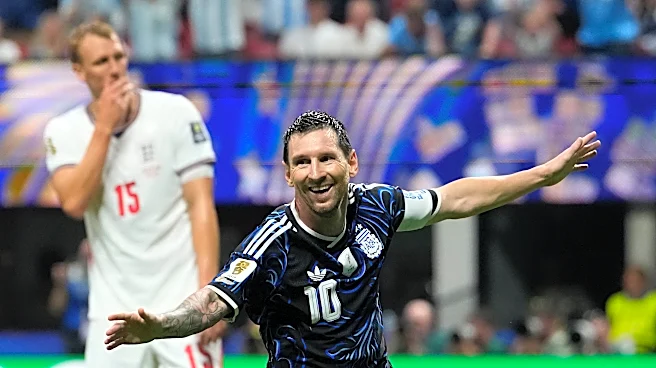
The entire conversation around the World Cup final seems to orbit one central question. Let's look at Argentina, who battled their way to the final. Their journey has been a tightrope walk, marked by dramatic comeback wins and moments of individual brilliance
from their aging but still magical superstar, Lionel Messi. One side of the argument is that Messi is a transcendent genius, a player so magnificent he can single-handedly bend the outcome of a match to his will and has carried a good-but-not-great team to the brink of glory. His supporters point to key goals and heroic moments as proof that he is the system itself. On the other side are the skeptics. They argue that Argentina’s success is built on a rock-solid, incredibly disciplined team structure. They see a squad that defends with ferocious unity and a midfield that works tirelessly to create opportunities. In this view, Messi is simply the beneficiary of this collective effort—the final, brilliant piece of a well-oiled machine, but not the whole machine itself. They’ll point out that many of the critical calls, including some controversial VAR decisions, have gone their way, suggesting a bit of luck, or perhaps favor, has paved their path.
Sound Familiar? It's the 'System QB' Debate
Now, take off the soccer jersey and put on an NFL one. Does this argument ring a bell? It should. It’s the single most durable, persistent, and rage-inducing debate in all of American football: the “Is he a system quarterback?” argument. For decades, NFL fans have torn each other apart over this very question. Was Tom Brady the undisputed GOAT, or was he a product of Bill Belichick’s brilliant system and a perpetually weak AFC East? Can Patrick Mahomes’s otherworldly magic be separated from Andy Reid’s revolutionary offensive schemes and a roster of elite weapons? The debate is endless. Just like with Messi, one camp sees a generational talent whose individual skill elevates everyone around them. The other sees a player who, while great, is put in a perfect position to succeed by the coaching, the offensive line, the defensive support, and the overall team structure. The argument is fundamentally about where credit is due. Is greatness an individual act of spontaneous genius, or is it the successful execution of a collective plan? It's the core tension of any team sport.
Why We Love This Argument
The reason this debate translates so perfectly from the pitch to the gridiron is that it’s not really just about sports. It’s about our dueling philosophies of success. We are fascinated by the idea of the lone hero, the individual who rises above the chaos to achieve the impossible. At the same time, we lionize teamwork, sacrifice, and the idea that a cohesive unit is stronger than the sum of its parts. This argument allows every fan to be a strategist. By arguing that a star player is just a “system” player, you’re signaling that you see the deeper game—the tactics, the coaching, the hidden architecture of a team’s success. Conversely, defending a player’s individual brilliance is a vote for magic, for the idea that some athletes are simply touched by a greatness that defies schematics. It’s an argument that has no right answer, which is precisely why it’s so much fun to have. It’s a way of engaging with the game on a deeper level, of trying to solve the unsolvable mystery of what truly creates a champion.
A Universal Language
The rise of soccer in America is undeniable. It’s now the country’s third most popular sport, and with the World Cup playing out on home soil, its cultural footprint has never been larger. But what events like this truly reveal is that the language of sports fandom is more universal than we might think. The names and rules may change, but the core narratives remain. The arguments over a referee’s call, the belief in superstitions, and the endless debates about legacy are the same whether you're at a pub in Manchester or a sports bar in Minnesota. Whether you call it football or soccer, the argument about what makes a player or a team truly great is identical. It’s about individual talent versus team unity, a beautiful, unresolvable debate that fuels group chats, sports talk radio, and barstool arguments from MetLife Stadium to stadiums across the globe.