







Your Brain on Autopilot: Emotional Contagion
The simplest reason is that emotions are contagious, especially in a crowd. When you're in a packed theater, you’re not just an individual viewer; you're part of a temporary tribe. This phenomenon, known as emotional contagion, is wired into our social
DNA. Studies have shown that we are up to 30 times more likely to laugh out loud when with others than when alone. This isn't just because the joke is funnier; it's because laughter is a social signal. Neuroscientists point to 'mirror neurons' in our brains. These specialized cells fire not only when we perform an action, like laughing or gasping, but also when we see someone else do it. In a theater, when the person next to you jumps, your brain instinctively mirrors that reaction, creating a feedback loop of shared emotion. A single gasp can ripple through a hundred people in milliseconds, turning a simple startle into a wave of collective fear.
The Group Mind: Collective Effervescence
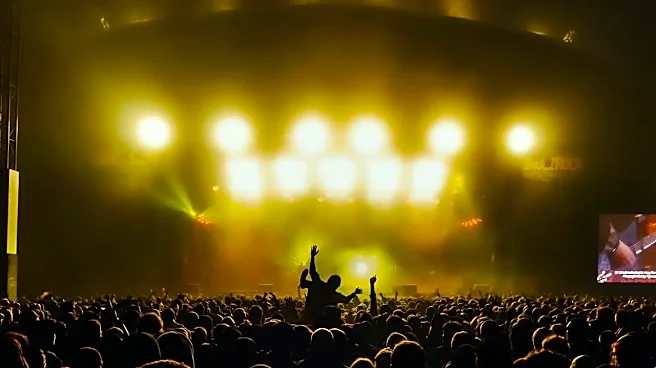
Sociologist Émile Durkheim called this feeling of shared euphoria "collective effervescence." It’s the energy you feel when a group comes together for a shared purpose, whether at a concert, a sports game, or a movie premiere. The boundaries between individuals blur, and you become part of a single, reacting entity. This shared attention intensifies whatever emotion is being presented. One study found that when people knew they were watching something at the same time as others—even if they weren't physically together—they reported sad scenes as sadder and happy scenes as happier. In a packed summer screening, this effect is supercharged. The collective focus directs all mental resources toward the film, making every emotional beat land with greater force. The shared experience validates your own reaction; laughing with 200 other people confirms that the joke was, in fact, funny, amplifying your enjoyment.
A Carefully Crafted Sensory Assault
Don't underestimate the theater itself. It's an environment engineered for maximum impact. The darkness eliminates distractions and focuses your attention entirely on the screen. The sheer size of the image fills your field of vision, making everything more immersive. But the real MVP is the sound. Modern surround sound systems are designed to manipulate you, using everything from subtle, low-frequency rumbles that create a sense of unease to sudden, high-frequency blasts that trigger your natural startle response. When a jump scare hits, it’s not just the visual that gets you—it's the explosive sound that attacks your senses from all directions. Combine that with the sound of dozens of people screaming simultaneously, and your brain’s threat-detection system goes into overdrive. Watching a horror movie in a packed theater makes the dinosaurs seem scarier and the suspense more palpable.
Applause as the Ultimate Payoff
And then there’s the applause. Unlike laughter or a gasp, clapping is a conscious act. It’s a moment of collective catharsis and approval. When a hero finally triumphs or a beloved character makes a surprise return, the burst of applause serves as a communal release of tension. It’s the audience communicating with itself, saying, "Yes, that was as awesome as we all thought it was." This act of group validation solidifies the memory of the experience. It transforms a passive viewing into an active, shared event. It’s the final beat in the symphony of shared emotion, a collective exhale after two hours of carefully orchestrated tension and release, and it’s a feeling that streaming at home, no matter how good the setup, simply can’t replicate.