


Michael Myers and Ghostface are the undisputed kings of Halloween horror, but they don't just wear different masks. They represent two warring philosophies of fear, one ancient and silent, the other modern, talkative, and chillingly self-aware.
The Shape of Evil vs. The Human Monster
At their
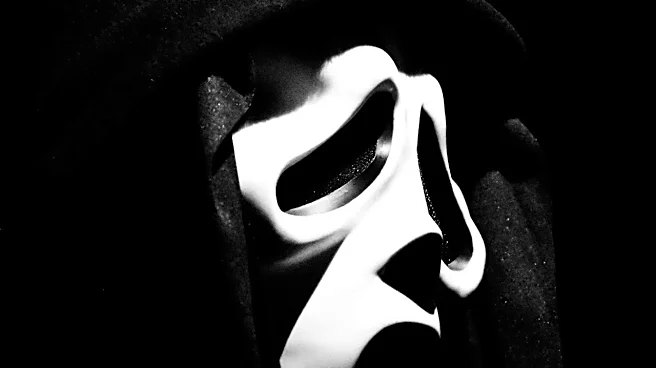
core, the two slashers prey on different anxieties. Michael Myers, first introduced in 1978's 'Halloween', is 'The Shape'—a silent, lumbering personification of pure, motiveless evil. He is presented less as a man and more as a supernatural force, a boogeyman who can't be reasoned with or truly stopped. The fear he generates is primal and mythic; it’s the terror of a predator whose actions defy logic. His blank, white mask erases all humanity, turning him into a void. Ghostface, on the other hand, is terrifying specifically because he is always human. The 'Scream' franchise, which debuted in 1996, established its killer not as one singular entity, but as a costume and identity adopted by a rotating cast of very mortal, often surprisingly familiar people. The horror here isn't supernatural, but social: the monster is your boyfriend, your best friend, or a classmate, driven by relatable (if twisted) emotions like revenge, jealousy, or a desire for notoriety.
Unstoppable Force vs. Manipulator of Rules
Their methods of terror are a study in contrasts. Michael Myers operates on instinct and raw, physical inevitability. He stalks his victims with a patient, unnerving persistence, often appearing in the background before closing in for a brutal, straightforward attack. His power comes from his seeming invincibility and silence. He doesn’t need to speak because he is a statement of doom in and of himself. Ghostface’s entire methodology is built on communication and psychological games. The taunting phone calls, the horror movie trivia, the manipulation of genre tropes—it's all part of the performance. While Michael embodies the slasher rules, Ghostface weaponizes them, explaining the conventions of horror to victims and the audience alike. This makes the threat intellectual as well as physical. You aren’t just running from a knife; you’re trapped in a deadly, self-aware game where the killer knows exactly how the story is 'supposed' to go.
The Fear of the Unknown vs. The Fear of the Known
Ultimately, they tap into two different reservoirs of dread. The fear of Michael Myers is the fear of the incomprehensible. Why is he doing this? He just is. As Dr. Loomis famously described him, he is 'purely and simply evil'. This creates a sense of cosmic horror in a suburban setting—the idea that a motiveless, random force of destruction can invade your safe, quiet neighborhood. The fear of Ghostface is the fear of betrayal. The terror doesn't come from a stranger in the shadows but from the chilling realization that the evil is coming from inside the house, figuratively and literally. The mask serves to hide a familiar face, and its reveal is the climax of the horror. 'Scream' posits that the real monsters are the people we trust, whose resentments and psychoses fester just beneath a normal-seeming surface. It’s the fear that someone you know, someone you love, could be the one holding the knife.
Genre Originator vs. Genre Deconstructionist
Each killer’s place in horror history defines their function. Michael Myers was a foundational figure who codified the rules of the modern slasher film in the late 1970s. 'Halloween' set the template: the silent killer, the 'final girl' trope, the stalking point-of_view shots, and the suburban setting as a battlefield. He is the genre in its purest form. Nearly two decades later, Ghostface arrived to take that template apart. The 'Scream' franchise is famously meta, a series of films that actively comments on, satirizes, and celebrates the very genre Michael Myers helped build. The killers in 'Scream' are horror fans themselves; they grew up watching movies like 'Halloween' and use that knowledge to inform their sprees. Ghostface isn't just a killer; he is a walking, talking critique of horror, making him the perfect icon for a more cynical, media-savvy generation.