






At a glance, a Vija Celmins drawing of the ocean is just that: a photorealistic slice of water. But look closer. The Latvian-American artist’s work is a masterclass in subtlety, a quiet meditation on surface that holds powerful lessons for fashion.
The Power of a Monochromatic Palette
In
a world saturated with color, Vija Celmins’s choice to work primarily in shades of gray is a radical act. Using graphite, charcoal, and various printmaking techniques, she renders her subjects—ocean waves, night skies, desert floors—in an intense monochromatic scale. This deliberate limitation forces the viewer to look past color and focus entirely on form, light, and, most importantly, texture. Fashion, an industry often driven by seasonal color trends, can learn from this restraint. By stripping away chromatic noise, the inherent qualities of a material can truly shine. Imagine a collection built not on a palette, but on a textural story: the subtle grain of a specific wool, the dense weave of a linen, or the smooth coolness of a silk charmeuse. Celmins’s work proves that a grayscale image can be more visually complex and engaging than a rainbow. It teaches designers that texture itself is a language, one that speaks in a whisper but conveys immense depth and sophistication.
Finding the Infinite in Repetition
Celmins is perhaps most famous for her serial depictions of the Pacific Ocean. These are not dramatic, stormy seas but calm, endlessly repeating surfaces. From a distance, they might appear identical, but up close, each wave and ripple is unique. She finds the infinite within a finite frame, showing how a seemingly uniform pattern is full of subtle variation. This is a profound lesson for fashion's use of pattern and textile. Think of a classic cable-knit sweater or a finely woven tweed. Their beauty lies not in a single, loud motif, but in the complex interplay of a repeated stitch or weave. Celmins’s approach encourages a 'slower look,' asking us to appreciate the meticulous labor and subtle complexity within a system. For fashion, this translates to celebrating the craftsmanship of a textile, where the texture is not merely a surface treatment but the very structure and soul of the garment. It’s a shift from 'look at this pattern' to 'get lost in this surface.'
Redescribing the Natural World
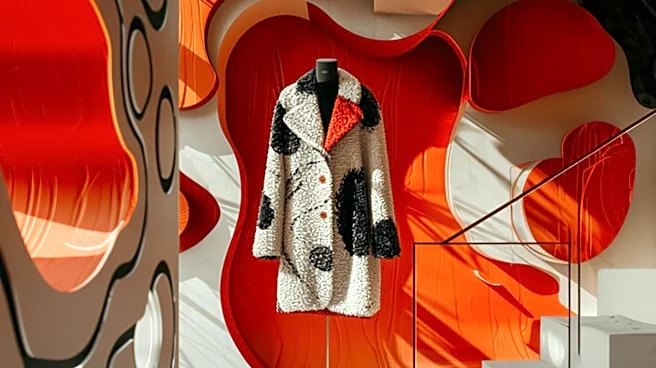
Celmins almost always works from photographs, many of which she takes herself. She calls her process 'redescribing' the image—translating a flat, mechanical reproduction of nature into a handmade object, mark by painstaking mark. This act of translation, one step removed from reality, is at the heart of fashion design. A floral print is not a flower; it is a designer's interpretation of one. A faux fur coat is a textural idea of fur. Celmins’s work validates this act of reinterpretation. Her drawings are not simply copies; they are meditations on the original image, imbued with the artist's hand and intention. This challenges fashion to move beyond literalism. Instead of just printing a picture of a spiderweb on a shirt, a designer following Celmins’s lead might study the web's structural logic—its tension, fragility, and geometry—and translate that into the construction or knit of a garment. It’s about capturing the essence of a texture, not just its appearance.
Texture as an Emotional Language
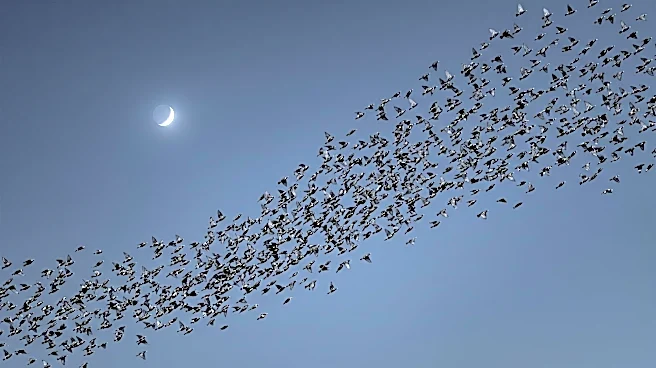
Though she often claims her work is not symbolic, it is undeniably evocative. Her endless night skies inspire awe, her delicate spiderwebs feel both beautiful and menacing, and her ocean surfaces can feel calming or unnerving depending on the density of her marks. Celmins demonstrates that texture, even in two dimensions, carries emotional weight. This is a fundamental, if sometimes overlooked, truth in fashion. The feeling of a fabric against the skin—the comforting weight of a wool coat, the airy lightness of a cotton dress, the structured security of denim—is a primary part of our relationship with clothing. A designer who understands texture can create garments that communicate feelings and moods before a single word is spoken. By focusing so intensely on the perceived surface quality of things, Celmins reminds us that texture is not just a visual or tactile element; it is a psychological one. It is the silent, sensory poetry of an object.