
The New Blueprint: Star as Power-Producer
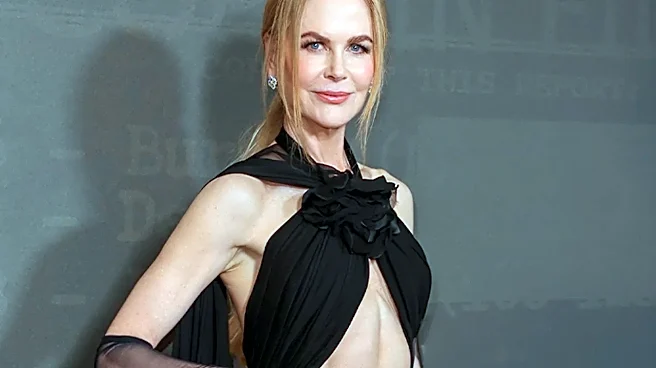
For decades, the path for an A-list actor was clear: show up, hit your mark, and let the studio handle the rest. Nicole Kidman’s career represents a seismic shift in that dynamic. Through her production
company, Blossom Films, co-founded with Per Saari in 2010, Kidman has pioneered a model where the star is not just an employee but the engine. This isn't a vanity production credit; it's a top-to-bottom strategy. It begins with identifying and optioning literary properties with compelling, often female-centric, narratives. From there, Kidman leverages her industry clout to attract other A-list talent, both in front of and behind the camera, packaging the project so attractively that streamers like HBO, Hulu, and Amazon can’t say no. Series like “Big Little Lies” and “The Undoing” became cultural phenomena, proving that a star-powered production could command the cultural conversation.
The August Advantage: Weaponizing the Off-Season
The masterstroke in this strategy is often not just the 'what' but the 'when'. Take “Nine Perfect Strangers,” which premiered on Hulu in August 2021. Traditionally, August is a dead zone for television, a dumping ground for reruns and uninspired programming as audiences are on vacation and networks save their big guns for the fall. Kidman and her team turned this weakness into a strength. By launching a high-wattage, star-studded mystery series during this quiet period, they created a vacuum and then filled it entirely. The show became an instant 'event' because there was little else competing for the prestige drama audience's attention. It was a brilliant piece of counter-programming that demonstrated a keen understanding of the modern content calendar. The 'August Event Series' isn't just about one month; it's a philosophy of finding the open spaces on the calendar and dominating them.
The Secret Sauce: Popular Novels and Prestige Packaging
At the heart of the Blossom Films model is an appreciation for a great story, and more often than not, that story starts on a bookshelf. The company has built a brand on adapting the work of popular authors like Liane Moriarty (“Big Little Lies,” “Nine Perfect Strangers”), Jean Hanff Korelitz (“The Undoing”), and Elin Hilderbrand (“The Perfect Couple”). This approach is a savvy risk-mitigation strategy. It provides a project with a proven narrative, complex characters, and a built-in audience of readers eager to see the story come to life. Kidman then elevates the material by 'packaging' it with prestige elements: co-stars like Reese Witherspoon, Meryl Streep, Hugh Grant, and Liev Schreiber, and acclaimed directors like Jean-Marc Vallée and Susanne Bier. This combination of popular source material and elite talent is what transforms a good book into appointment television.
A Replicable Model for a Chaotic Market
So, what can studios, locked in a brutal streaming war and facing franchise fatigue, learn from this? The Kidman model offers a clear, replicable path forward. It’s about empowering proven talent, trusting their taste, and investing in source material that already has a connection with an audience. Instead of spending hundreds of millions on untested concepts, the producer-star model provides a de-risked pathway to creating the kind of high-quality, buzz-worthy limited series that streamers desperately need to retain subscribers. It trades the gamble of blockbuster original IP for the curated certainty of a well-chosen novel brought to life by a passionate star. In an industry craving reliable hits, Kidman's Blossom Films isn't just producing shows; it’s providing a playbook for the future of prestige television.