



The Diamond: A Legacy of Brilliance
For over a century, the diamond has been the undisputed champion of commitment and luxury, thanks in large part to brilliant marketing and its genuine rarity. A diamond's allure is rooted in its natural origin—forged deep within the Earth over billions
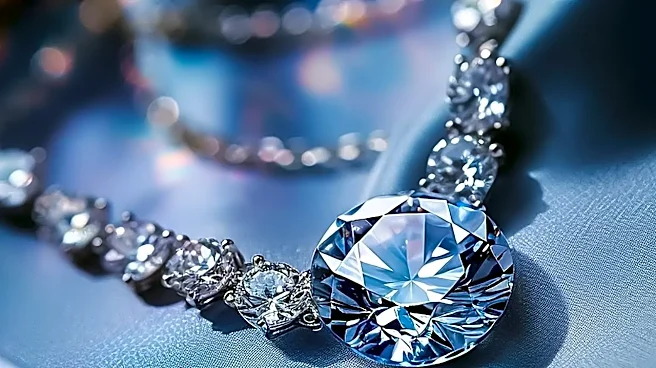
of years—and its unparalleled hardness. Scoring a perfect 10 on the Mohs scale of hardness, it is the most durable natural substance on Earth, making it ideal for a ring meant to be worn every day for a lifetime. Its sparkle, a mix of brilliance (white light), fire (rainbow flashes), and scintillation (flashes of light as it moves), creates the iconic shimmer that has captivated wearers for generations. A diamond represents tradition, a classic choice that carries the weight of history and is often seen as a family heirloom in the making.
The Moissanite: A Star Is Born (Literally)
Moissanite has a far more cosmic origin story. It was first discovered in 1893 by Nobel Prize-winning chemist Dr. Henri Moissan in a meteor crater in Arizona. He initially thought he’d found diamonds, but later identified the crystals as silicon carbide. Natural moissanite is incredibly rare, so the gemstones you see today are all created in a laboratory. This lab-grown origin is not a weakness but a core part of its modern appeal. It allows for a flawless, conflict-free stone with a minimal environmental footprint. Far from being a mere 'imitation,' moissanite is a distinct gemstone with its own unique properties and a story that begins not in the earth, but in the stars.
Showdown: Sparkle and Strength
When placed side-by-side, the differences between diamond and moissanite are subtle but distinct. Moissanite has a higher refractive index than diamond, which means it's technically even more brilliant. It's most known for its exceptional 'fire'—the colorful flashes of light it throws. In certain lighting, a moissanite will cast more fiery, rainbow-like sparkles than a diamond, which is prized for its crisp white light. In terms of durability, diamond is a 10 on the Mohs scale, but moissanite is a very close second at 9.25. This makes it harder than any other gemstone alternative, including sapphire or ruby, and more than durable enough for the rigors of daily wear. It will not scratch, cloud, or lose its sparkle over time, ensuring its beauty is just as permanent as a diamond's.
The Question of Cost and Conscience
This is where the two stones diverge most dramatically. A moissanite of a similar size and quality can cost up to 85-95% less than a natural diamond. This isn't because it's 'cheap,' but because its lab-grown process bypasses the enormous costs of mining, distribution, and the tightly controlled supply that keeps diamond prices high. For many, this frees up budget for a more elaborate setting or simply for other life priorities. Beyond price, there's the ethical dimension. While the diamond industry has made strides with certifications to prevent conflict stones, the only way to be 100% certain of a gem's conflict-free and environmentally-friendly origin is to choose one made in a lab. Moissanite offers that peace of mind as a standard feature.
Beyond the Trend Cycle
So how do these stones 'outlast trends'? By offering two different paths to permanence. The diamond is the enduring classic, a symbol of tradition whose value is tied to its natural history and cultural weight. It outlasts trends by being the benchmark against which trends are measured. Moissanite, on the other hand, represents a modern form of permanence. It aligns with contemporary values of sustainability, ethical consciousness, and financial pragmatism without sacrificing beauty or durability. It outlasts trends not by ignoring them, but by embodying a set of principles that are themselves becoming timeless. Choosing it isn't a trendy compromise; it's a deliberate decision to prioritize a different set of values.