

An Epic Without a Script
When filming began on Gladiator, the production had a massive budget, an A-list director, and a movie star in Russell Crowe. What it didn't have was a finished script. The crew started shooting with only 21 pages of an approved screenplay, a fraction
of the typical 110-page length for a feature film. Crowe himself has called the early drafts "absolute rubbish," and was so frustrated he considered leaving the project altogether. This created a chaotic environment where scenes were written and rewritten on the fly, often just days or hours before they were filmed. Director Ridley Scott and Crowe would frequently work late into the night, hashing out dialogue and plot points to keep the production moving forward, essentially building the narrative while the cameras were rolling. This constant state of flux was the first major crisis, forcing a level of improvisation that would define the entire production.
Building Rome in Malta and a Computer
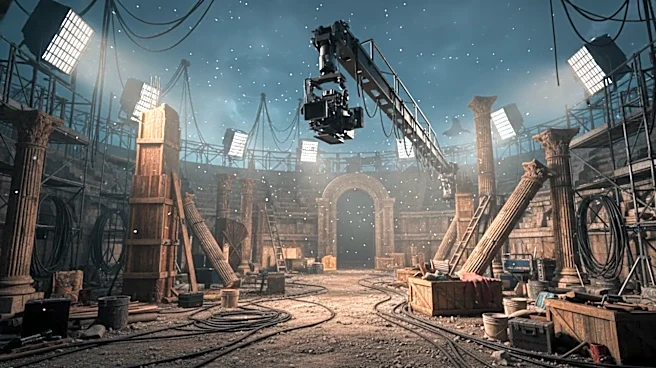
To create the grandeur of ancient Rome, particularly its iconic Colosseum, would be a monumental task for any film. The Gladiator production didn't have the budget to build a full-scale replica, so they got creative. In Malta, the crew constructed a massive, three-story section of the Colosseum, but only about one-third of the circumference. This practical set provided a tangible environment for the actors and the brutal ground-level action. The rest of the arena, including the upper tiers and the thousands of roaring spectators, was a masterclass in early digital effects. Visual effects company The Mill digitally extended the structure, creating the illusion of the complete, awe-inspiring amphitheater. This blend of a practical foundation with digital extensions was groundbreaking for its time, allowing Scott to achieve an epic scale that would have otherwise been impossible, effectively hiding the physical limitations of the set.
The Unthinkable Loss
The film's most significant crisis struck on May 2, 1999, when veteran actor Oliver Reed, who played the grizzled gladiator trainer Proximo, died suddenly of a heart attack during a break in filming. Reed was a pivotal character, and he still had several crucial scenes left to shoot. His death was a devastating blow to the cast and crew, both personally and professionally. The production was faced with a terrible choice: recast the role and reshoot all of Reed's scenes, which was permitted by their insurance policy, or find another way. Scott, determined to preserve Reed's powerful final performance, refused to replace him. This decision forced the filmmakers into uncharted territory, requiring them to find a way to complete Proximo's arc without its actor, a challenge that would lead to one of cinema's most famous and innovative visual effects solutions.
A Digital Ghost Saves the Film
To complete Proximo's remaining scenes, Ridley Scott and his team pioneered a technique that was almost unheard of in 2000. For a reported cost of over $3 million, they embarked on a process of digital resurrection. Using a body double to perform the physical actions, the visual effects artists at The Mill digitally composited Reed's face onto the stand-in. They meticulously repurposed outtakes and unused footage of Reed from earlier in the shoot to create his final, poignant moments. For instance, Proximo's memorable last words, "Shadows and dust," were lifted from a different scene filmed earlier. The shot where Maximus sees Proximo in his jail cell was achieved by placing a 3D digital mask of Reed's face onto the body double. This combination of practical stand-ins and digital wizardry seamlessly completed Proximo’s story, allowing the character to have a heroic final scene that honored the late actor's performance and saved the film from a potentially catastrophic setback.