



The Conventional Wisdom: Power and Placement
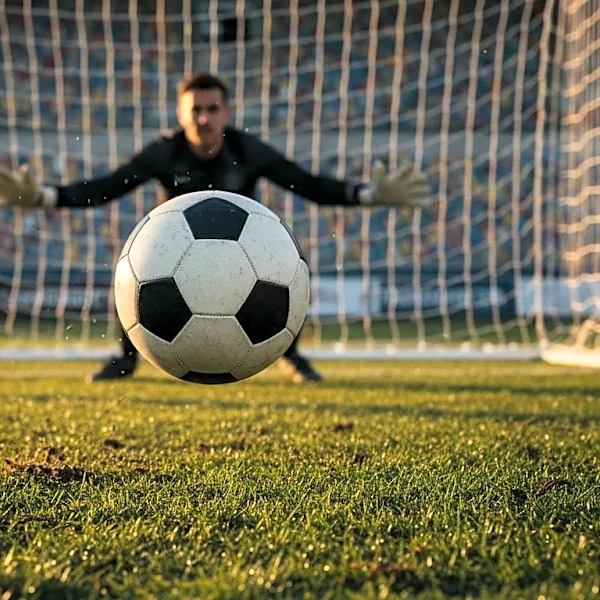
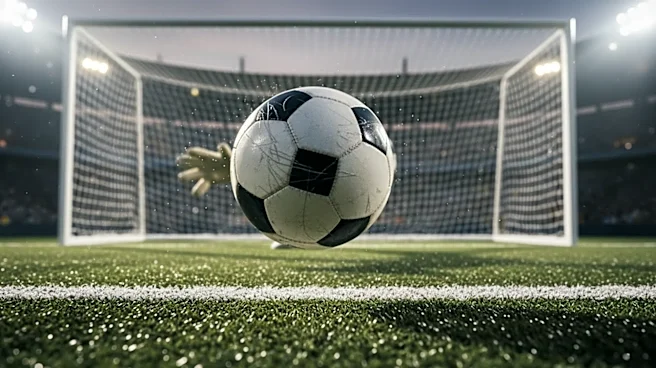
Ask any fan what makes a good penalty, and you'll likely hear the same advice: hard, low, and into the corner. This is the 'safe' penalty. The logic is simple. A powerful, well-placed shot is difficult for a goalkeeper to reach, even if they guess the correct
direction. The ball travels so fast that a keeper’s dive is a race against physics. For decades, this has been the accepted gold standard. Young players are coached to pick their spot, keep their composure, and strike the ball with authority. Statistically, success rates for penalties in normal play are high, often around 85%, which seems to support this conventional wisdom. It’s a straightforward approach for a high-pressure situation, removing as much variability as possible. The goal is to make the shot 'keeper-proof' by simply hitting it too well to be saved.
The 'Smart' Shot and Game Theory
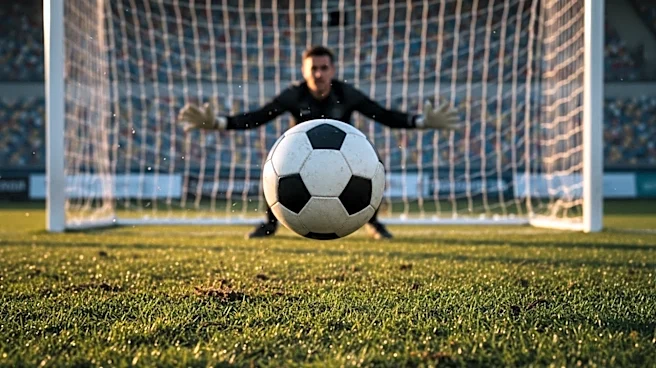
The problem with the 'safe' shot is that it’s predictable. Goalkeepers are not just reacting; they're analyzing. They study film and know a right-footed player naturally finds it easier to shoot across their body to the left. This is where game theory enters the picture. The smartest penalty isn't necessarily the best-struck one, but the one that best exploits the goalkeeper's decision-making. Since the ball reaches the goal faster than a human can react, the keeper must guess. This creates a mind game. Data shows that goalkeepers dive to one side or the other almost all the time, leaving the center of the goal open. Therefore, a 'smart' but risky shot is one aimed right down the middle. If the keeper dives, they look foolish as the ball casually rolls in. The highest percentage shots, statistically, are often in the top corners—hard to reach but also easier to miss entirely. The smartest kick isn't about eliminating the keeper, but about out-thinking them.
The Panenka: Psychology as a Weapon
The ultimate example of the 'smart' penalty is the Panenka. Named after Czech player Antonín Panenka, who audaciously used it to win the 1976 European Championship, the technique involves a delicate chip down the middle of the goal. It's a pure psychological play, relying entirely on the assumption that the goalkeeper will dive. If they don't, the taker is left looking completely humiliated as the keeper catches the gentle lob. But when it works, it’s a moment of genius that can psychologically devastate the opposing team. Pelé described Panenka as "either a genius or a madman," perfectly capturing the high-risk, high-reward nature of a penalty that abandons safety for pure mind games. It's the ultimate proof that in the duel from 12 yards, what happens in the mind is as important as what happens on the foot.
Pressure Changes the Equation
In the sterile environment of a training ground, a player can perfect a smart, clinical strategy. But a World Cup final is anything but sterile. The weight of a nation's hopes can make even the most elite players crumble. Research shows that penalty conversion rates drop significantly in shootouts compared to regular play. Furthermore, players taking a kick to avoid losing have a success rate below 60%, while those taking a kick to win the match convert over 90% of the time. This 'loss aversion' makes players revert to what feels safe, which can also be what's most predictable for a prepared goalkeeper. The smartest play might be a cheeky chip, but under immense pressure, it’s often the simple, 'safe' shot that players trust—for better or for worse.