





The Miracle of the Accidental Masterpiece
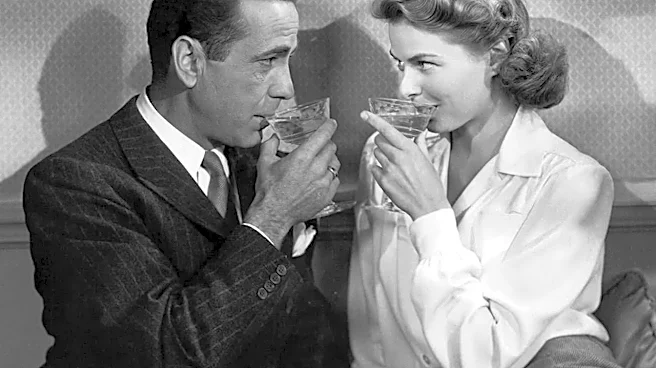
The making of Casablanca is a Hollywood legend. The script, based on an unproduced play, was written on the fly, with new pages and dialogue changes delivered to the cast daily. No one, not even the writers or stars Humphrey Bogart and Ingrid Bergman,
knew how it would end. Bergman famously asked director Michael Curtiz who her character, Ilsa, would end up with, and he had to admit he didn't know yet. The production was a B-picture by studio standards, not a prestige blockbuster. Its stars were contract players, its budget was modest at around $1 million, and it was shot almost entirely on the Warner Bros. backlot in Burbank. Expectations were moderate at best. The studio just wanted a timely, patriotic drama to capitalize on public interest in the war. What they got was a cultural phenomenon that would win the Academy Award for Best Picture and become one of the most beloved films of all time.
Was Warner Bros. Actually on the Ropes?
The most dramatic part of the legend is that this unexpected hit rescued Warner Bros. from financial collapse. It’s a great story, but the historical record tells a different tale. While the Great Depression had hit all major studios hard in the early 1930s, causing Warner Bros. to carry significant debt, by the early 1940s, the situation had stabilized. The studio was known for its ruthless cost-efficiency and a factory-like production model that churned out dozens of films a year, balancing A-list pictures with profitable B-movies. Warner Bros. was one of only two major studios, alongside MGM, to avoid falling into receivership during the Depression. While no studio was ever completely secure, Warner Bros. in 1942 was a functioning, profitable, and powerful company. It was a cost-conscious machine, but it was far from the brink of extinction.
A Solid Hit, Not a Lone Savior
Casablanca premiered in late 1942, rushed into theaters to capitalize on the real-world Allied invasion of North Africa, which included the city of Casablanca itself. This fortuitous timing gave the film an immediate publicity boost money couldn't buy. It performed well, earning an initial $3.7 million at the U.S. box office on its modest budget. This made it a solid, respectable hit for the studio—but it wasn't the year's biggest moneymaker, nor was its success out of character for a studio that consistently produced popular films. Its profits were a welcome and significant addition to the studio's balance sheet, but they didn't single-handedly clear away massive debts or reverse a corporate death spiral that wasn't actually happening. The film's success was more of a high-performing asset in a diverse portfolio rather than a last-minute bailout.
Why the Myth Endures
So if Casablanca didn't literally save Warner Bros., why does the legend persist? The answer lies in the film's own improbable magic. Everything about its creation felt like a happy accident, from the lightning-in-a-bottle chemistry between Bogart and Bergman to the iconic lines of dialogue reportedly added at the last minute. The film's own story is one of reluctant heroism and unexpected grace under pressure, and the myth of its production reflects that perfectly. The idea that this accidental masterpiece also performed a miracle for its studio adds another layer to its romantic, larger-than-life legacy. The story is repeated not because it's factually airtight, but because for a film this perfect, it feels like it should be true. It elevates a successful business transaction into the realm of cinematic folklore, where it rightfully belongs.