


Act I: The Setup
Every movie needs a strong opening, and so does a concert. Screenwriters call it the "inciting incident"—the moment that hooks the audience and establishes the stakes. For a musician on stage, this is the job of the first one or two songs. A band can’t
afford to warm up; they must grab the crowd's attention immediately. This isn't the time for a slow-burning deep cut. The goal is to establish energy, confidence, and a clear connection. Think of Charley Pride opening his 1981 ACL set with the undeniable fun of 'Is Anyone Goin' To San Antone?'. It’s a statement of intent: it tells the audience they're in good hands and sets the tone for the journey ahead, much like a film’s opening scene introduces its hero and their world.
Act II: The Confrontation
The second act is where a story develops its complexity, and the same is true for a setlist. This is the “journey” portion of the show, where an artist builds on their strong opening by exploring different textures, tempos, and emotions. Just as a screenplay's second act introduces subplots and character development, a setlist’s middle section weaves in new material, beloved album tracks, and moments that vary the energy. Too many high-energy songs in a row leads to audience fatigue, while too many ballads can kill the momentum. The art is in the balance—creating an emotional arc. This is where a band might shift from a rocker to an acoustic number, showcasing their range and giving the audience a chance to breathe before building the energy back up for the finale.
The Midpoint Twist: The Surprise
Many great films feature a midpoint twist—a surprising event that re-energizes the plot and sends it in a new direction. In a concert, this often comes in the form of a surprise cover song, a special guest, or a radically reimagined version of a familiar hit. It’s a moment designed to create a unique, shared experience. When Kacey Musgraves brought out a full string section for her 2018 ACL performance of 'Golden Hour,' it elevated the song and created a memorable, unexpected shift in the show's texture. These moments break the predictability and remind the audience that a live performance is a one-of-a-kind event, not just a recitation of the album. It’s a narrative jolt that keeps the crowd on its toes, ensuring they remain invested through the final act.
Act III: The Resolution
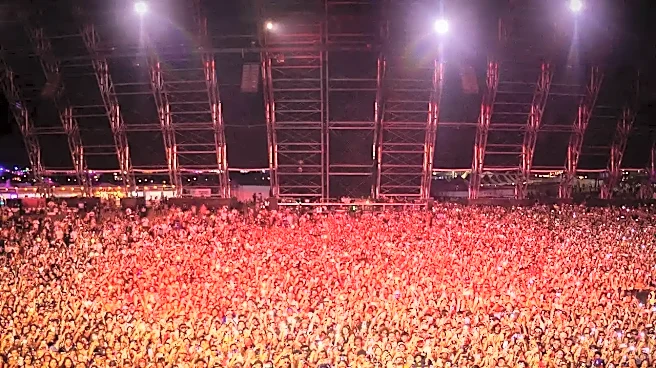
The third act is all about the climax and resolution. In a film, it’s the final confrontation where the story’s central conflict is resolved. In a concert, it’s the grand finale—the part of the show where the band unleashes its biggest, most anthemic songs. This is the cathartic payoff the audience has been waiting for. The energy that was carefully built during the second act is released in a wave of singalongs and explosive instrumentation. But it doesn't just end there. The encore serves as the story's denouement, or final resolution. It’s the last chance to leave an impression, often with a song that’s either a massive crowd-pleaser or a more intimate, emotionally resonant track that sends the audience home with a sense of closure and satisfaction.