




Our Brains Are Wired for This
Fear of the unknown is one of the most fundamental human emotions, deeply embedded in our evolutionary wiring. Our ancestors survived by assuming that a strange noise in the night was a predator, not just the wind. This primal “fight or flight” response
is a powerful tool that horror filmmakers expertly exploit. When a movie denies us visual information, our brains are hardwired to fill in the blanks with the worst possible scenarios. This concept, sometimes called cosmic or Lovecraftian horror, suggests that true terror comes not from a monster, but from the chilling realization of our own insignificance in a vast, incomprehensible universe. The fear isn’t just about a creature; it’s about the dread of what that creature represents: a threat so far beyond our understanding that we are rendered utterly powerless.
The Sound of Silence (and a Creak)
In horror, what you hear is often more important than what you see. Sound design is the invisible architecture of suspense. An unsettling silence can be more unnerving than a loud score because our brains go on high alert, anticipating a threat. Filmmakers use this to their advantage, creating tension with off-screen sounds—a distant whisper, footsteps on the floor above, or an unnatural scratching. This technique forces the audience to participate in creating the horror; our imagination conjures an image far more specific and personal than a director ever could. Think of the eerie quiet in A Quiet Place or the disorienting noises outside the tent in The Blair Witch Project. The terror comes from the sound, but the monster is built entirely inside our own heads.
What the Camera Deliberately Hides
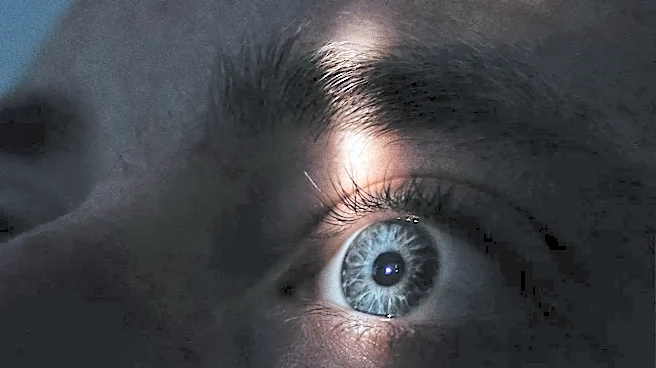
A filmmaker's greatest tool for unseen horror is the camera itself. By controlling what the audience gets to see—and what it doesn't—directors can masterfully build suspense. A camera that lingers on a character's terrified face as they stare at something off-screen is a classic technique. We don't need to see the threat; their reaction tells us everything we need to know and lets our imagination do the rest. Similarly, shots that emphasize empty space or darkness, like the vast, black woods in The Blair Witch Project, create a canvas for our fears. This use of negative space implies a constant, unseen presence, making us feel vulnerable. Point-of-view shots can also amplify this, putting us directly in the character's shoes and limiting our field of vision, making us feel just as trapped and blind as they are.
When Less Monster Is More Monster
Sometimes, the most effective strategy is to simply not show the monster. The classic example is Steven Spielberg's Jaws. The mechanical shark, nicknamed Bruce, was notoriously unreliable and frequently broke down in saltwater. Forced to adapt, Spielberg suggested the shark’s presence using John Williams’ iconic two-note score, point-of-view shots, and the ominous yellow barrels. By the time the shark finally appears in full, the audience's fear has been magnified by anticipation. The creature they imagined was far more terrifying than any animatronic, and the film became a masterclass in suspense. The same principle powered The Blair Witch Project, which became a cultural phenomenon without ever showing its titular villain. The film’s power lies in leaving the audience to wonder, proving that the most enduring horror is often the one left entirely to the imagination.