







The Ultimate Existential Threat
Across four films, the toys of Toy Story have faced a gauntlet of existential crises. They’ve feared being replaced by cooler toys, being outgrown by their owner, being sold, incinerated, and forgotten. But in the 2020s, a more insidious and pervasive
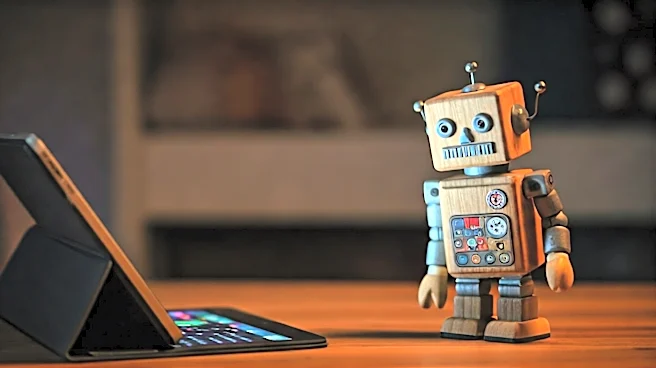
rival looms large: the tablet. The glowing, alluring, endlessly entertaining screen is not just another toy; it’s the antithesis of a toy. A toy’s purpose is to be a vessel for a child’s imagination. A screen’s purpose is to deliver pre-packaged content, demanding little more than passive consumption. For Woody, Buzz, and the gang, the enemy isn't another action figure—it's the algorithm. It’s the YouTube Kids autoplay, the endless scroll of TikTok, the siren song of a video game that leaves the physical toy chest gathering dust. This isn't just a new villain; it's a philosophical foe that strikes at the very heart of what it means to be a toy. It’s the final boss of playtime.
The Franchise Has Been Building to This
This theme isn't a sudden swerve; it’s a natural extension of the franchise's core values. From the very beginning, Toy Story has championed tangible, imaginative play. Andy didn’t just have toys; he created entire worlds, elaborate narratives of good and evil where Woody was the brave sheriff and Buzz the noble space ranger. His imagination was the battery that brought them to life. The franchise has consistently positioned active play as virtuous. The villains, meanwhile, often represent a corruption of this ideal. Sid used his toys for destructive, Frankenstein-like experiments, not play. Al McWhiggin saw them as static collectibles, not companions. Lotso turned a daycare into a prison. While none of these were screens, they represented a failure to engage with toys as intended. A story where the toys must actively compete with a screen for a child's attention and affection feels like the most urgent, modern-day version of this conflict. They’d be fighting not just for their own survival, but for the very soul of play itself.
The Hypocrisy Is the Entire Point
So, let's address the big, glowing elephant in the room: isn’t it hypocritical for a multi-million-dollar animated feature, created on computers by a subsidiary of Disney and destined to be streamed on Disney+, to wag its finger at screen time? Absolutely. And that's precisely what would make it so brilliant. The most effective cultural critiques are often Trojan horses. A movie that entertains us on a screen while subtly forcing us to question our relationship with screens is the height of subversive storytelling. Imagine watching Toy Story 5 with your family on the living room TV or an iPad, and as the toys on screen struggle for relevance against a digital device, you feel a pang of recognition. You look over at your own kid, or down at the phone in your own hand, and the movie’s theme lands not as a lecture, but as a shared, communal moment of self-reflection. It’s a meta-narrative that doesn’t break the fourth wall so much as it dissolves it, making the audience complicit in the story's central tension. Pixar, at its best, doesn’t just tell you how to feel; it creates the conditions for you to discover the feeling yourself.
A Worthy Mission for Woody and Buzz
Toy Story 4 left our heroes on divergent paths. Buzz is with the old gang, committed to their new kid, Bonnie. Woody has embraced a new purpose as a “lost toy,” helping other forgotten playthings find children. A screen-centric plot could powerfully reunite them. What could be a bigger challenge for Woody's new mission than a world where kids are no longer looking for toys? He wouldn’t just be finding a toy a home; he’d be reminding a child *how* to play. For Buzz and the others, the challenge is even more immediate: how do you stay relevant to a kid who prefers a tablet? Do you try to compete? Do you stage an intervention? This conflict provides rich emotional territory, testing the toys' resilience, creativity, and their fundamental belief in their own purpose. After nearly 30 years, giving these characters a problem that the audience is actively wrestling with in their own homes is the only way to make their story feel as vital and necessary as it did in 1995.