






The Stand for a Paycheck
The first major test of Martin’s resolve came in 1957, shortly after his explosive breakup with comedy partner Jerry Lewis. Many in Hollywood predicted Martin's career would wither without Lewis. He was cast in the World War II drama "The Young Lions"
alongside two of the era's biggest dramatic actors, Marlon Brando and Montgomery Clift. It was the role he needed to prove he was more than a comedian's straight man. But there was a problem: the studio offered him a fraction of what his co-stars were making. Feeling disrespected, Martin refused to show up to set, citing a supposed illness. It was a high-stakes gamble. The film could establish him as a serious actor, but only if he got there. The studio eventually blinked, significantly raising his salary. The film went on to be a critical and commercial success, launching the next phase of Martin’s career and proving he was a box-office draw on his own. He had stood his ground and won, emerging not just as a credible actor but as a star who demanded—and received—respect.
A Battle for Loyalty
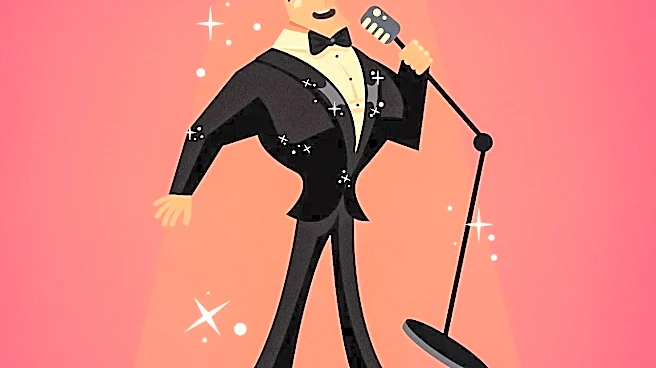
The second walkout happened years later, at the height of his television fame. "The Dean Martin Show" was a massive hit for NBC, largely because of its host’s relaxed and spontaneous style. That easygoing vibe was built on the chemistry he had with his regular crew, including his longtime pianist and friend, Ken Lane. Lane was not just an accompanist; he co-wrote Martin’s signature theme song, "Everybody Loves Somebody," and was a beloved part of the show's family. At one point, a network executive decided to fire Lane. When Martin got the news, he didn’t argue or negotiate. He simply refused to do the show. He told the network flatly that if Ken Lane wasn't on the piano, he wouldn't be on the stage. The walkout was quiet but firm. With their top-rated star refusing to work, NBC had no choice but to back down. Lane was immediately rehired. This incident wasn't about money; it was about loyalty. Martin proved he was willing to bring a massive television production to a halt for a friend.
The Art of the Walkout
These two events reveal the truth behind the Dean Martin persona. His famous nonchalance wasn't apathy; it was confidence. He played the part of a man who didn't care about the details, famously avoiding rehearsals for his variety show. Yet, when a line was crossed—whether it was about professional respect or loyalty to a friend—he acted decisively. The walkouts were not diva tantrums. They were calculated moves by a man who understood his own power in a system that often tried to undervalue its talent. After the acrimonious split from Jerry Lewis, where Martin felt he was treated like a sidekick, he was determined to never again be in a position where he wasn't in control. These confrontations, one for money and one for principle, solidified his authority in Hollywood.
A Stronger Brand of Cool
Far from damaging his career, these power plays only enhanced Martin's mystique. His willingness to walk away proved his cool wasn’t just a performance; it was real. It showed there was steel beneath the velvet voice. This reputation for quiet strength gave him incredible leverage. When NBC approached him for his variety show, he made outrageous demands: a massive salary, minimal rehearsals, and a commitment to only work one day a week. The network, knowing he was a man who would walk if he didn't get what he wanted, agreed to everything. The result was one of the most successful and iconic television shows of its era, a program that ran for nine seasons and defined his legacy. The show's famous tagline, "Everybody Loves Somebody," was more than a song—it was a reflection of a man who fought for his people, both on and off the screen.