



Beyond Fit and Wash
When you’re shopping for cropped jeans, your checklist is probably straightforward: Do they fit well through the hip and thigh? Is the rise comfortable? Is the wash the perfect shade of blue, black, or white? These are all important, but they are surface-level
checks. They determine if you’ll love the jeans today. A far more important detail determines if you’ll still love them after a dozen washes. While five-star reviews might praise a jean’s initial feel or trendy look, they rarely dive into its construction. That’s where the real story of quality lies, and it’s a story told not by the fabric you see first, but by the seams holding it all together.
The Real Secret: Seam Construction
The hidden detail that separates high-quality cropped jeans from fast-fashion alternatives is the construction of the inseam and outseam. It’s not just about stitching; it’s about how the seams are folded, sewn, and finished. In superior denim, you’ll often find a flat-felled seam. Turn a pair of high-end jeans inside out, and you’ll see it: a clean, enclosed seam with no raw, fuzzy edges. This is created by folding the raw fabric edges over each other and securing them with double stitching. This technique makes the seam incredibly durable and less likely to fray or irritate your skin. The alternative, an overlocked seam, simply uses thread to cover the raw edge. While faster and cheaper to produce, it’s less durable and can create bulk. The type of seam directly impacts how the jean leg hangs and behaves over time—a factor that becomes much more visible in a cropped style.
Why Seams Matter More on Cropped Jeans
On full-length jeans, minor flaws in a seam might go unnoticed. But on a cropped pair, where the hem ends abruptly above the ankle, every detail is magnified. The structure of the seams dictates the jean's drape and shape. A poorly constructed outseam can cause the dreaded “leg twist,” where the seam gradually rotates toward the front of your leg after washing. This happens when the fabric isn't cut precisely along the grainline or the seam isn't sewn evenly. On a cropped jean, this twist is immediately obvious, making the silhouette look awkward and unbalanced. A well-made flat-felled or selvedge outseam provides the structural integrity needed to keep the leg hanging straight, ensuring the cropped cut looks intentional and clean, not like a manufacturing defect.
How to Spot Quality Construction
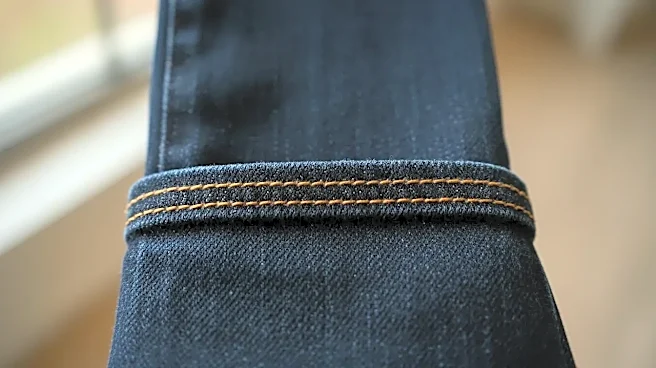
You don’t need to be a denim expert to identify good construction. The first step is to turn the jeans inside out. Look at the long seam running down the inside of the leg (the inseam). Is it neatly folded and flat, with two parallel rows of stitches visible? That’s likely a flat-felled seam, a hallmark of quality. Or do you see a thick thread wrapping around the raw fabric edge? That’s an overlocked seam, common in mass-market jeans. Next, check the stitch density. High-quality jeans have more stitches per inch (typically 10-12), which creates a tighter, more resilient seam. Lower-quality jeans often have fewer stitches (6-8 per inch) to speed up production, resulting in weaker construction. Finally, check the outseam—the one on the outside of your leg. On premium denim, this might be a selvedge seam, identifiable by a clean, self-finished edge often marked with a colored line when cuffed. This type of construction prevents fraying and is a clear indicator of superior fabric and craftsmanship.