





The Floating Dolly Shot
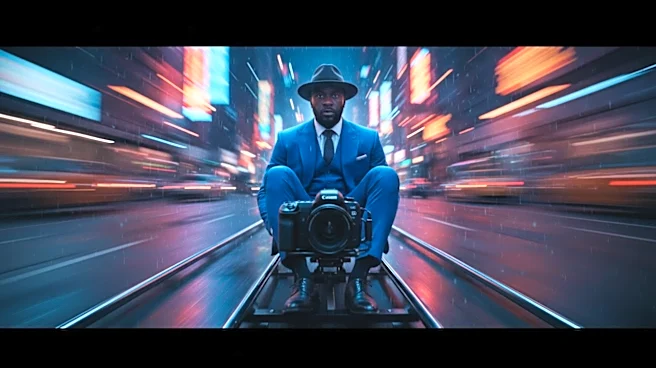
If there’s one shot that screams “Spike Lee Joint,” it’s the double dolly. You know it when you see it: a character appears to float or glide through a scene, their feet unseen, as the background streams past. First developed with cinematographer Ernest
Dickerson for 1990's "Mo' Better Blues," this technique involves placing the actor on a moving dolly that travels along with the camera dolly. The effect is surreal and dreamlike, detaching the character from their physical reality. It's used for different emotional effects, from conveying a character's fear to capturing the haunting inevitability of Denzel Washington’s walk to his fate in "Malcolm X." Lee's intention is often to draw attention to the filmmaking itself, reminding the viewer they are watching a movie and heightening the emotional stakes of the moment.
Confronting the Audience
Lee has never been a director to let his audience sit passively. One of his most powerful and imitated techniques is having characters break the fourth wall and speak directly to the camera. This isn't for a witty aside, as is common in other films; it's often a direct confrontation. In "Do the Right Thing," a montage of characters from different ethnic backgrounds unleashes a torrent of racial slurs directly at the viewer, forcing the audience into the line of fire and making them experience the aggression firsthand. Similarly, in "25th Hour," Edward Norton's character seems to be talking to himself in a mirror, but the camera placement makes it feel as though he's addressing the audience. Lee uses this tool judiciously to create a powerful sense of intimacy and unease, making the film's themes impossible to ignore.
Color with a Purpose
In a Spike Lee film, color is never just decoration; it's a character. Working with long-time collaborators like cinematographer Ernest Dickerson and costume designer Ruth E. Carter, Lee uses color to build worlds and amplify emotion. In "Do the Right Thing," the intense, warm palette of reds, oranges, and yellows makes the audience feel the oppressive heat of the hottest day of the summer, mirroring the rising racial tensions. The vibrant, Afro-centric costumes of the younger characters stand in stark contrast to the muted tones of others, visually representing a cultural shift and a proud embrace of identity. In other films, like "Bamboozled," Lee has used contrasting color schemes, such as orange and blue, to symbolically represent racial and cultural divides. This meticulous use of color gives his films a rich, layered visual texture that deepens their narrative impact.
An Arsenal of Angles
Beyond his most famous trademarks, Lee employs a full arsenal of camera techniques to control a scene's mood. He frequently uses Dutch angles—tilting the camera to one side—to create a sense of disorientation and tension, a technique used heavily throughout "Do the Right Thing" to signify the neighborhood's skewed reality. Low-angle shots are used to give characters a sense of power and confidence, while high-angle shots can emphasize vulnerability or fear. This constant, dynamic camera movement is intentional. Lee avoids static shots, believing that the movement of the camera, the actors, and the frame itself injects life and energy into the story, reflecting the dynamism of the urban environments he so often portrays.