









A Feel-Good Chemical Cocktail
At its core, the enjoyment of fear is a masterful trick our body plays on itself. When you’re watching a jump scare, your brain’s alarm system, the amygdala, goes into overdrive. This triggers the classic “fight-or-flight” response, flooding your system with
adrenaline and cortisol. Your heart pounds, your breathing quickens, and your senses sharpen. But here’s the twist: this rush is often followed by a release of feel-good chemicals like endorphins and dopamine. Once the immediate threat passes and your thinking brain reminds you that you're safe on your couch, you're left with a lingering sense of euphoria. It's a natural high, a biochemical reward for surviving a danger that was never real to begin with. Some researchers estimate that about 10% of the population specifically enjoys this adrenaline-fueled sensation.
The Brain's Built-In Safety Net
The key to enjoying a scary movie is that, on some level, your brain knows it's fake. While your primal amygdala is screaming “danger,” the more rational part of your brain, the prefrontal cortex, is processing the context. It recognizes the cues of entertainment: the camera angles, the soundtrack, the fact that you bought a ticket or pressed 'play'. This awareness creates a psychological safety net. You get to experience the intense physical and emotional sensations of fear without the actual risk of harm. Psychologists refer to this as enjoying a “safe danger.” It’s the same principle that makes roller coasters fun. You get the stomach-dropping thrill of plunging toward the ground, but you remain confident that you're strapped in and the ride will end safely.
The Thrill of a Happy Ending
Much of the satisfaction from a horror movie comes after the tension breaks. A psychological concept called “excitation transfer theory” helps explain this. The theory suggests that the arousal you feel during the scary parts of a movie—that racing heart and heightened alertness—doesn't just vanish when the threat is gone. Instead, that residual arousal sticks around and amplifies whatever emotion you feel next. So, when the hero finally defeats the monster or the credits start to roll, the feeling of relief is intensified into a powerful sense of triumph and enjoyment. The greater the fear and suspense, the more profound the payoff, turning what should have been a negative experience into a deeply satisfying one.
Scared Together, Bonded Together
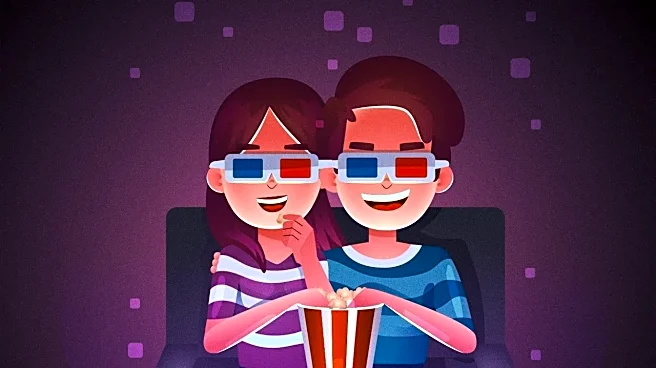
There's a reason horror movies are a classic choice for date nights and group outings. Experiencing fear in a crowd can be a powerful bonding experience. When we're scared with other people, our shared emotional journey creates a sense of connection. Grabbing a friend's arm during a tense scene isn't just a reflex; it's a social act that can literally release oxytocin, the “bonding hormone.” Enduring a common (fictional) enemy unites us, turning a personal fright into a communal event. This shared vulnerability reinforces social ties, making us feel closer to those who went through the ordeal with us, even if the ordeal was just two hours of well-crafted cinematic dread.
A Rehearsal for Real Life
On a deeper level, engaging with fictional threats can serve as a form of practice. Watching characters navigate terrifying situations allows us to contemplate how we might react in a crisis, all from a position of safety. It can be a way of building confidence and resilience. By confronting our fears in a controlled environment, we get a sense of mastery. We learn to regulate our own emotional responses and may feel more prepared to handle real-world anxieties. It's a low-stakes simulation that lets us explore the boundaries of our own courage, providing a sense of accomplishment when we make it through to the end.