




The Unmistakable World of Missy
Before you can appreciate the challenge of her stage shows, you have to understand the universe she built. Since her 1997 debut with "The Rain (Supa Dupa Fly)," Missy Elliott’s music videos have been a portal to another dimension. Working with directors
like Hype Williams, she rejected hip-hop’s visual clichés in favor of something far stranger and more compelling. She gave us the iconic inflatable trash bag suit, fisheye lenses that warped reality, and choreography that felt both goofy and impossibly cool. Her world was one of Afrofuturist imagination where anything was possible: her head could detach from her body in "One Minute Man," she could become a bee-covered DJ in "Work It," and she could dance through a video game in "Sock It 2 Me." This wasn't just window dressing for the music; it was a core part of the artistic statement, blending sound, fashion, and performance into a single, unforgettable language.
The Challenge of Live Translation
Here’s the problem: what works with unlimited takes, green screens, and a multi-million-dollar budget often falls flat under the harsh lights of a live stage. Music videos are a controlled medium of illusion. A live performance is an immediate, physical reality. You can’t just copy and paste a video concept onto a stage and expect it to work. The magic of Missy’s videos lies in their slick, post-production impossibilities. How do you make a dancer hover, reverse time, or wear a costume that weighs more than they do, all while maintaining the raw energy a live audience craves? This is the tightrope walk that separates good performers from legends. It requires not just replication, but re-imagination—distilling the feeling of the video into something tangible and thrilling in the moment.
Deconstructing the 'Hip Hop Honors' Master Class
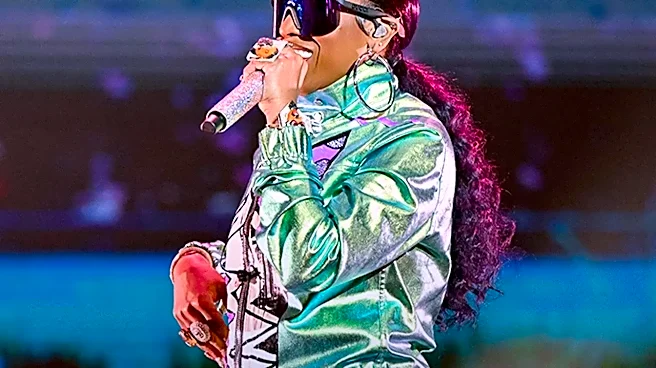
The headline points to a tribute, but Missy has given several master classes. Her 2017 performance of "She's a Bitch" at the VH1 Hip Hop Honors was a perfect example. She didn't just sing the song; she brought the entire Hype Williams-directed video to life. Decked out in the signature black leather and bald head, she was flanked by an army of dancers in matching outfits, turning the stage into the stark, futuristic world of the original video. She even performed part of it from inside a water tank, a direct and audacious nod to the video's most memorable sequence. But it's not just about one-to-one recreation. In other performances, she’s used puppets to stand in for collaborators, as she did with Pharrell on 'The Voice,' or used clever choreography and staging to suggest the backward-talking segments of "Work It" without relying on digital tricks. These aren't just medleys; they are curated, theatrical experiences that prove her visual concepts are robust enough to exist beyond the screen.
More Than Nostalgia, It's a Blueprint
Watching Missy perform live is not just a trip down memory lane. It’s a lesson in artistic integrity. She understands that her visual identity is inseparable from her sound. The tribute performances, whether starring her or fellow artists like Eve and Remy Ma, work because they honor this principle. They are celebrations of an entire creative vision. In an era where artists are expected to have a complete aesthetic world, Missy Elliott provided the blueprint decades ago. She proved that you could be experimental, humorous, and deeply weird while achieving massive commercial success. Her stage shows reinforce this legacy. They demonstrate that with enough creativity, the boundaries between the cinematic and the theatrical can disappear, leaving only the pure, electrifying energy of a true original.