






Milan's Drawing Room
Before it was the backdrop for supermodels, the Galleria was, and remains, 'il salotto di Milano'—Milan's drawing room. This isn't just a shopping mall; it's the city's social heart, a place where locals have met for over a century to debate politics,
sip an aperitivo, and simply exist in public. The grand cafés that line its mosaic floors, like the historic Camparino and Biffi, are institutions in their own right, serving as the unofficial stage for daily Milanese life. Its purpose was always to be a grand connector—physically linking the sacred space of the Duomo cathedral with the cultural stage of the La Scala opera house, and socially connecting the people of Milan under its soaring glass canopy.
A Symbol of a New Italy
To appreciate the Galleria is to understand the moment it was born. Construction began in 1865, a time of immense national pride following the unification of Italy. Named for Victor Emmanuel II, the first king of the new nation, the arcade was a bold statement of ambition and modernity. Its architect, Giuseppe Mengoni, won a competition to design a structure that would embody the spirit of this new Italy. He envisioned a masterpiece that blended Italian classicism with revolutionary engineering. Tragically, Mengoni fell to his death from the scaffolding just days before the arcade's final inauguration in 1877, never seeing his completed vision fully embraced by the city and nation it was built to celebrate.
An Architectural Game-Changer
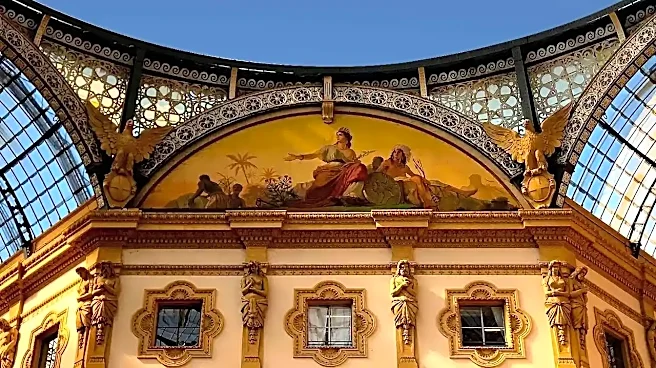
Today, we're used to enclosed malls, but in the 19th century, the Galleria's design was groundbreaking. Its magnificent iron-and-glass roof, which forms two intersecting barrel vaults meeting in a spectacular central dome, was an engineering marvel. At 47 meters high, the dome floods the space with natural light, creating a feeling of being outdoors while sheltered from the elements. This structure was one of the earliest and grandest of its kind, setting a precedent for shopping arcades from Naples to London. The floor beneath is just as impressive, featuring intricate mosaics of the coats of arms of Rome, Florence, Turin, and Milan—the successive capitals of a unifying Italy. The most famous of these, the bull from Turin's coat of arms, has a well-worn spot where locals and tourists alike perform a ritual spin for good luck.
Where History Meets Haute Couture
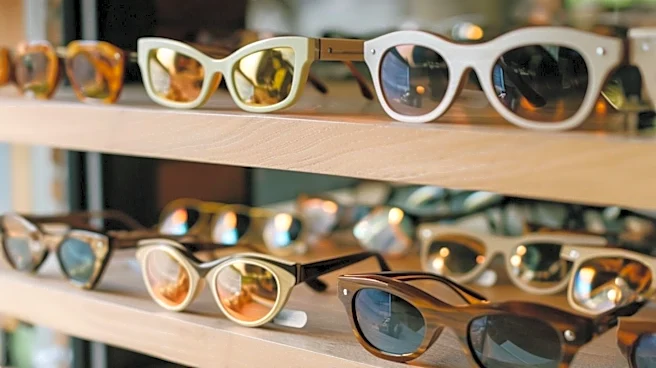
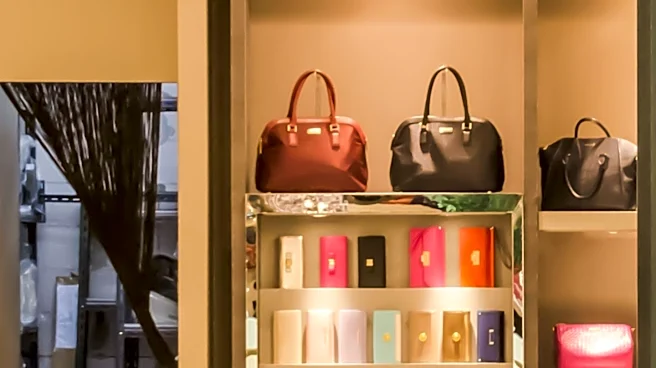
It's no accident that the Galleria is now a global temple of luxury. Its identity has always been intertwined with the finest Italian craftsmanship. This is where Mario Prada opened his first store in 1913, selling leather goods to an elite clientele. Today, that original Prada storefront sits alongside flagships for Gucci, Louis Vuitton, and Armani, making the arcade a pilgrimage site for fashion lovers. The decision for an event like Vogue World to use this space is more than a choice of convenience or beauty. It's a symbolic nod to Italy's deep-rooted connection between history, art, and fashion. The Galleria isn't just a stage for luxury; it's part of its origin story, a place where the legacy of Italian style is both preserved and perpetually reinvented.