








The Promise and the Prison
What exactly is a “Golden Generation”? It’s a rare, almost cosmic alignment—a group of uniquely talented, world-class athletes who all happen to emerge for the same team, in the same country, at the same time. Think of it as a championship team on paper
before a single game is played. It’s Michael Jordan’s Bulls, the 90s Cowboys, or the dynastic Warriors. For national teams, which can't buy talent, it feels like a miracle. But the label is a gilded cage. From the moment it’s bestowed, the clock starts ticking. The media builds a throne, fans expect a coronation, and every tournament becomes a referendum. Anything less than a major championship is seen not just as a failure, but as a historic waste. The pressure is immense. This group wasn’t supposed to just compete; they were supposed to define an era. When they don’t, the conversation shifts from celebrating their talent to dissecting their shortcomings.
The Agony of 'What If'
For the ultimate cautionary tale, look no further than England's national soccer team of the 2000s. David Beckham, Steven Gerrard, Frank Lampard, Wayne Rooney, Rio Ferdinand, Paul Scholes—the names read like a hall-of-fame ballot. They were titans for their club teams, winning every trophy imaginable. But together, for England, they were a puzzle that could never be solved. Was it coaching? Was it tactical inflexibility? Were the egos too big to coexist? For a decade, the narrative was one of glorious, frustrating failure. Every two years, at the World Cup or the European Championship, the cycle repeated: breathless hype, a few tense wins, and an agonizing exit, usually on penalty kicks. Their legacy isn’t one of brilliance, but of unanswered questions. They are remembered as a collection of incredible individuals who, for reasons still debated in pubs across England, could never become a truly great team. They are the poster children for a Golden Generation that rusted.
The Redemption of Victory
Now, consider Spain. For decades, they were Europe’s perennial underachievers. Always technically brilliant, always full of flair, and always, *always* finding a way to lose when it mattered most. Their own Golden Generation—featuring Xavi, Andrés Iniesta, Iker Casillas, and David Villa—carried this same baggage. Then came Euro 2008. When Spain finally won a major trophy, it was like a dam breaking. The victory didn’t just put a cup in their trophy case; it fundamentally altered their DNA. The “talented but fragile” label vanished, replaced by “relentless winners.” They followed it up by winning the 2010 World Cup and Euro 2012, completing a run of dominance unmatched in modern international soccer. Their talent was never in question, but the 2008 win validated it. It proved they could handle the pressure, turning them from a collection of great players into arguably the greatest international team of all time. Winning retroactively defined their entire story.
The Unwritten American Chapter
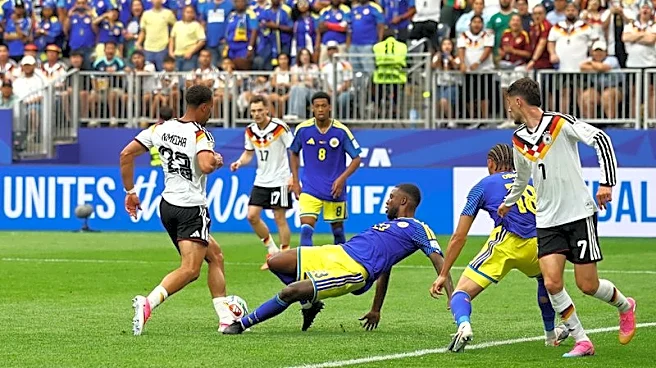
The concept isn't just foreign. The U.S. Men’s National Team is living it right now. With players like Christian Pulisic, Weston McKennie, Gio Reyna, and Tyler Adams starring for major European clubs, this is widely considered the most talented pool of American players ever assembled. They have been dubbed a Golden Generation. And so, the pressure is on. Winning a CONCACAF Nations League is nice, but the real judgment will come at the 2026 World Cup, hosted on home soil. Will they be England, the group that buckled under the weight of its own potential? Or will they be Spain, the team that seizes its moment and forges a new identity? Every game, every performance is being viewed through this lens. Their legacy is being written in real time, and it will ultimately be judged by a simple, brutal metric: did they win?