







Animation's Kinetic Magic
Think back to the first time you saw Moana sing “How Far I’ll Go.” The music, written by Lin-Manuel Miranda, is an undeniable force. But what makes the sequence iconic is how the animation visualizes Moana’s yearning. She doesn’t just stand on the beach
and belt it out. She sprints along the shoreline, leaps across rocks, and physically pushes back against the confines of her village. The ocean itself becomes her dance partner, rising and falling with the crests of the melody. The environment is an active participant. This fusion of character, song, and kinetic energy is the core of what made Moana’s musical numbers so powerful. Animation provided a limitless canvas for this type of storytelling, where a character's inner turmoil could be expressed through grand, physics-defying movement. The challenge for director Thomas Kail, who comes from a theater background with hits like Hamilton, is to translate that specific magic without it feeling static or stage-bound.
The 'You're Welcome' Problem
Nowhere is the challenge more apparent than with Maui’s signature number, “You’re Welcome.” In the animated film, the song is a whirlwind of visual gags and constant transformation. Maui, voiced by the returning Dwayne Johnson, shape-shifts, his animated tattoos dance across his skin, and the background flattens into a 2D tapestry that he manipulates. It’s a masterclass in dynamic visual storytelling that complements Johnson's immense vocal charisma. Recreating this in live-action is a monumental task. While Johnson’s charm is undeniable, he can't literally pull the sun from the sky or sprout coconuts by burying a creature's guts. The sequence will inevitably rely heavily on CGI, but if it's just Johnson standing in front of a green screen of flashy effects, it risks losing the playful, tactile energy of the original. The solution lies in choreography—not just for Johnson, but for the camera and the digital environment, making them all move with the same wit and rhythm as Maui himself.
Nature as a Dance Partner
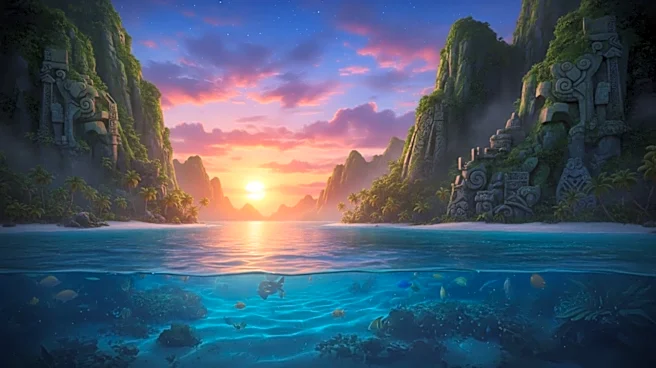
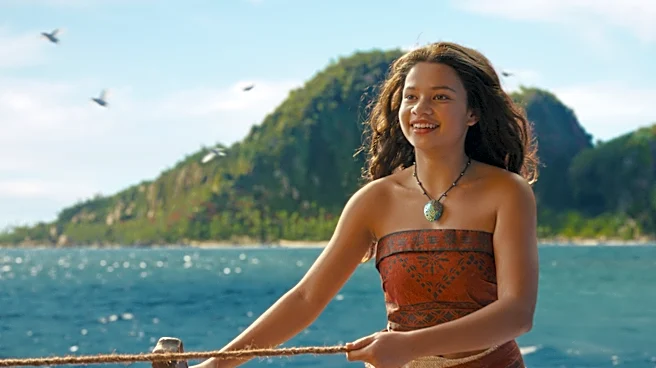
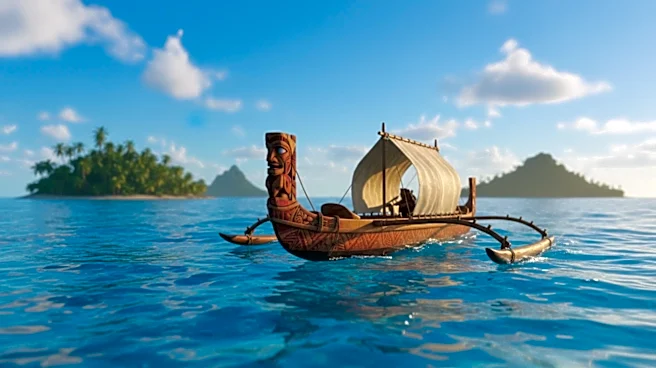
A bigger orchestra and a polished vocal performance are table stakes for a Disney remake. They’re expected. What will set the live-action Moana apart is how it uses its tangible, real-world setting. Director Thomas Kail has spoken about the importance of making the world feel tactile, with real dirt, sand, and a seaworthy canoe. This impulse is correct, and it must extend to the musical numbers. The songs in Moana are elemental; they are about the ocean, the islands, and the sky. Therefore, the choreography shouldn't be confined to just the actors' bodies. The film needs to find ways for newcomer Catherine Lagaʻaia to interact with the environment. The waves should feel like they’re responding to her song, the wind should physically move through the sails in time with the rhythm, and the very landscape of Motunui must feel alive. The movement can’t just be a performance layered on top of a pretty backdrop; it must be an interaction with it.
Learning from Remakes Past
Disney's track record with live-action musical numbers is a mixed bag. For every vibrant, kinetic “Prince Ali” in Aladdin that captured the spirit of the original, there have been moments that felt stilted, trapped by the constraints of realism. Some adaptations feel more like a filmed stage play, sacrificing the boundless imagination of animation for a grounded approach that can sometimes feel inert. The most successful adaptations understand that a one-to-one recreation is impossible and often undesirable. Instead, they find a new visual language to express the song's core emotion. For Moana, that language must be movement. It must be dance. It must be the physical expression of a journey, not just a soundtrack to one. The film has the talent, with Johnson and Jemaine Clement returning and Lin-Manuel Miranda contributing a new song, but the execution of its musical identity will determine whether it truly soars.