



More Than Just Furniture
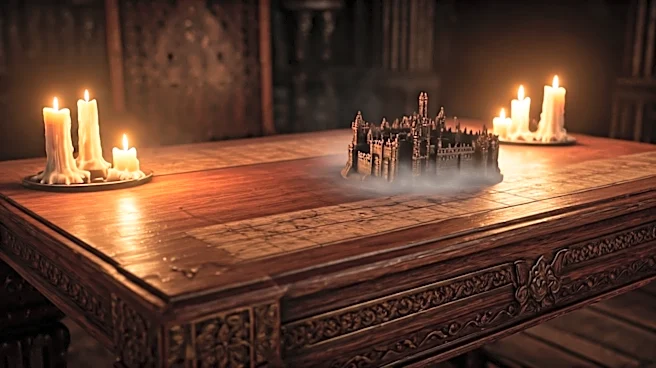
First, let’s be clear: this isn’t just any table. This is the Painted Table of Dragonstone, a massive, carved stone map of Westeros created for Aegon the Conqueror. In its origin, it was a symbol of ambition, unity, and Targaryen destiny—the very tool
a king used to visualize bringing a continent under the rule of one family, one sigil, one name. When we first see it in *House of the Dragon*, it carries that same historical weight. It’s a legacy, a birthright, the physical embodiment of the power Rhaenyra Targaryen believes is hers to inherit. For a brief time, it functions as it should: a place for strategic planning and royal pronouncements. But the show masterfully subverts this initial purpose. Instead of a tool for conquest and glory, the Painted Table quickly becomes an altar for grief, a stage for rage, and a blueprint for self-destruction. The showrunners understood that in a story about the intimate, messy collapse of a single family, the grand tools of empire become instruments of personal horror.
The Cauldron of Grief
The table’s transformation into an object of dread is cemented in the Season 1 finale. When Otto Hightower brings the terms from the Greens, Rhaenyra stands at the head of the table, projecting a queen’s authority. But the real turning point comes later. After learning of her son Lucerys’s murder at the hands of Aemond, a shattered Rhaenyra stumbles back into the map room. The camera follows her as she approaches the table, her back to us. She doesn't speak. She just stands there, staring down at the carved lands her ancestors conquered and her son died over. In that moment, the Painted Table is no longer a map of Westeros; it’s a gravestone. It represents the entire world that has just been stolen from her. The light from its braziers illuminates not a queen planning her next move, but a mother hollowed out by loss. The silence is deafening, and the table absorbs every ounce of her pain. From this point forward, every meeting held there is haunted by this foundational trauma. War is no longer a political calculation; it’s a raw, emotional necessity born in this very spot.
A Stage for Impulsive Rage
If the table is a sacred, painful object for Rhaenyra, for her husband Daemon it’s just another prop for his own volatile ego. Where Rhaenyra reveres its history, Daemon treats it with contempt. He stalks around it, leans on it, and in a particularly telling moment, literally walks across it to make a point. This act isn’t just disrespectful; it’s symbolic of his entire approach to the war. He sees the strategy, the kingdoms, and the people involved as mere obstacles or pawns on a board he can trample at will. His physical dominance over the table shows us he doesn’t care about the Targaryen legacy of unity; he cares about victory and vengeance, whatever the cost. When he stands on the table, looming over his allies, he’s not leading a council; he’s performing his own power. The table, for him, is a stage. This makes any scene with Daemon near it crackle with tension. We’re not watching a strategist; we’re watching a powder keg with a lit fuse, and the map of Westeros is just kindling.
The War Room of Doom
By Season 2, the transformation is complete. The war council scenes around the Painted Table are exercises in anxiety. The lighting is dark and oppressive, often coming only from the table's own glowing fissures, making it look like a cracked and bleeding land. Every plan hatched here feels cursed from the start. It’s where the disastrous “Blood and Cheese” plot is conceived—a grim, whispered conversation that seals the fate of a child miles away in King's Landing. The show frames these scenes with a sense of claustrophobia. The characters lean in, their faces shadowed, their voices low. The table isn't helping them see the bigger picture; it's forcing them to focus on their own resentments and thirst for revenge. It's a feedback loop of bad ideas. Every time the camera pans across its illuminated surface, highlighting another castle or river, the audience doesn't feel the thrill of strategy. We feel a pit in our stomachs, because we know this table is no longer a tool for winning a war. It's a machine that manufactures tragedy.