


The ‘Cost-Per-Wear’ Mindset
In fashion, the term “cost-per-wear” is a simple but powerful metric for measuring an item's true value. You calculate it by dividing the garment's price by the number of times you wear it. This shifts the focus from the initial price tag to its long-term
utility. A $300 dress worn 30 times has a cost-per-wear of $10. A $50 fast-fashion dress that lasts only five wears costs the same $10 per wear. This simple math reframes shopping from a quest for the cheapest price to a search for the best value, encouraging investment in quality pieces designed for longevity.
The Crochet Trend: Allure and Fragility
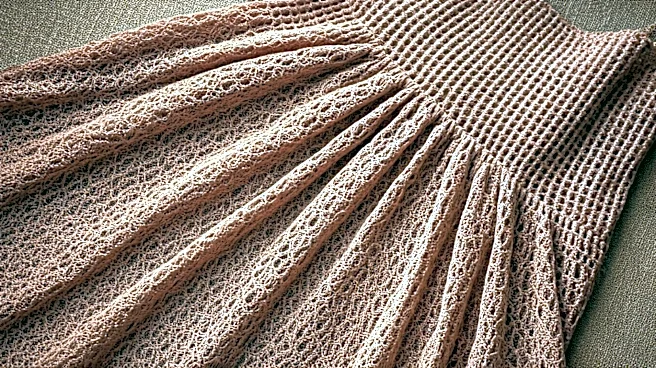
The open-weave crochet dress is dominating summer 2026, appearing on beaches and city streets alike. Its popularity stems from a broader cultural shift towards artisanal, handcrafted aesthetics as a response to mass-produced fashion. The airy, textured look is perfect for summer, offering a breathable and stylish option that feels both nostalgic and modern. However, its very structure—the open, interlocking loops—can be its downfall. These delicate constructions are prone to snagging, stretching, and losing their shape, making the quality of the material and craftsmanship paramount.
A Textile Nerd’s Buying Guide
When evaluating a crochet dress, the fiber content is your first clue. Natural fibers like cotton, linen, and silk blends tend to offer better breathability, drape, and comfort than synthetics. High-quality organic cotton, for example, is durable and holds its shape well. Synthetics like acrylic and polyester are often more affordable and boast vibrant colors, but they can be less breathable and may pill over time. Look closely at the construction. Stitches should be consistent and even, with no large, unintentional gaps. Check the finishing: are the ends neatly woven in, or are they sloppily knotted? A well-made garment feels substantial, not flimsy, and will recover its shape when gently stretched.
Handmade vs. Machine-Made
True crochet cannot be replicated by a machine; it must be done by hand. This is why even mass-market “crochet” often has a handmade component. The term is sometimes used to describe machine-knitted fabrics that mimic a crochet look. A truly handmade piece will have slight, charming inconsistencies that signal its artisanal origin. A machine-made open-knit will look more uniform. While one isn't inherently better, a handmade garment from a reputable artisan often involves higher-quality materials and more careful construction, justifying a higher price point and, hopefully, a lower cost-per-wear.
Caring for Your Investment
The longevity of a crochet dress heavily depends on how you care for it. Due to their delicate nature, these garments should be washed as little as possible. When you do wash them, a gentle hand wash in cold water is the safest method. Never wring or twist the fabric; instead, gently press the water out by rolling it in a clean towel. The most critical step is drying. Never hang a wet crochet or open-knit dress, as the weight of the water will stretch it irreparably. Always lay it flat to dry on a towel or drying rack, gently reshaping it to its original dimensions. For storage, fold your dress rather than hanging it to prevent the shoulders and neckline from dropping and stretching over time.