








The Voice He Famously Disliked
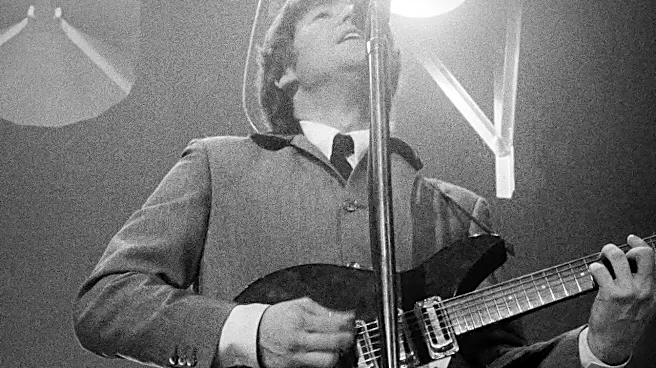
It’s one of rock’s great ironies: John Lennon was notoriously insecure about the sound of his own voice. He often described it as thin and yearned to disguise it, telling producer George Martin he wanted to sound like "the Dalai Lama singing from a mountaintop."
This insecurity, however, became a creative engine. His reedy, slightly nasal tone was anything but a conventional rock 'n' roll powerhouse, yet it carried an unmistakable authenticity. It was the perfect vehicle for the wit, cynicism, and vulnerability that defined his lyrics. Instead of hiding its imperfections, his producers learned to lean into them, making his voice a direct line to his emotional state.
Inventing Effects Out of Impatience
Lennon hated the tedious process of double-tracking vocals—singing the same part twice to create a fuller sound. His impatience led him to ask Abbey Road engineer Ken Townsend for a technical solution. The result was Automatic Double Tracking, or ADT. This groundbreaking technique used a second tape machine with a slight, fluctuating delay to create an artificial second vocal take. It became a signature of the mid-era Beatles sound, giving Lennon's voice a dreamy, slightly detached quality on tracks like "Tomorrow Never Knows" and "Strawberry Fields Forever." He was also a huge fan of slapback echo and varispeed recording, which involved altering tape speed to change the pitch and timbre of his voice, further distancing it from its natural state.
From 'Yeah, Yeah, Yeah' to Brutal Honesty
While The Beatles started with simple love songs, Lennon’s songwriting evolved into a vehicle for radical self-expression. Influenced by Bob Dylan, his lyrics moved from catchy pop phrases to deeply personal, introspective, and often surreal storytelling. Songs like "Help!" were genuine cries for assistance disguised as upbeat hits, while tracks like "I'm a Loser" and "Nowhere Man" laid his insecurities bare. Later, he would embrace avant-garde wordplay in "I Am the Walrus" and raw, confessional outpourings in his solo work, particularly on the "Plastic Ono Band" album, which was heavily influenced by his experience with primal scream therapy. This brutal honesty meant his sound was inextricably linked to his life story.
A Rock 'n' Roll Foundation
Beneath all the studio experimentation was a musician grounded in the raw energy of early rock 'n' roll. Unlike Paul McCartney’s more melodic and harmonically complex approach, Lennon's songwriting was often rhythmically driven and direct. He favored straightforward, punchy chord progressions and a percussive guitar style that served the song's lyrical intent above all else. This grounding in blues and rockabilly gave even his most psychedelic explorations a solid, propulsive core. While McCartney might build a beautiful cathedral of chords, Lennon would often find the most powerful and direct path, creating a tension that defined The Beatles' dynamic.
The Indispensable Collaborators
Lennon's sonic vision would have been impossible to realize alone. His ideas required a team of brilliant and patient collaborators. Producer George Martin acted as the essential translator and arranger, turning abstract requests into musical reality. Engineers like Geoff Emerick and Ken Townsend were the technical wizards who invented new methods on the spot to achieve the sounds Lennon heard in his head. And, of course, there was the unparalleled musical partnership with Paul McCartney. Their contrasting styles—Lennon's raw edge against McCartney's melodic craftsmanship—created a sound far greater and more complex than either could have achieved on his own.