



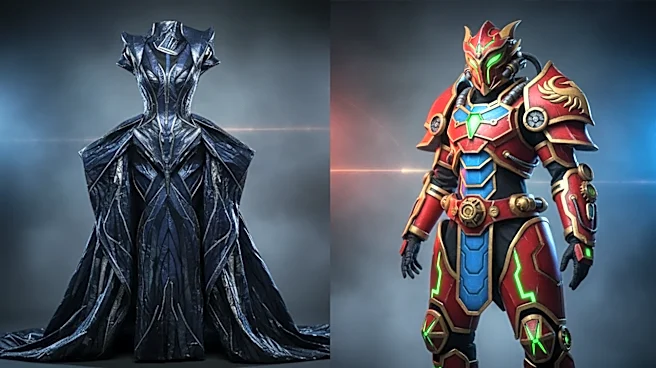

The Five-Second Readability Test
On the chaotic floor of a convention center, your costume has about five seconds to make an impression from 20 feet away. This is where the most fundamental principle of character design comes into play: the silhouette. Animation and comic book artists
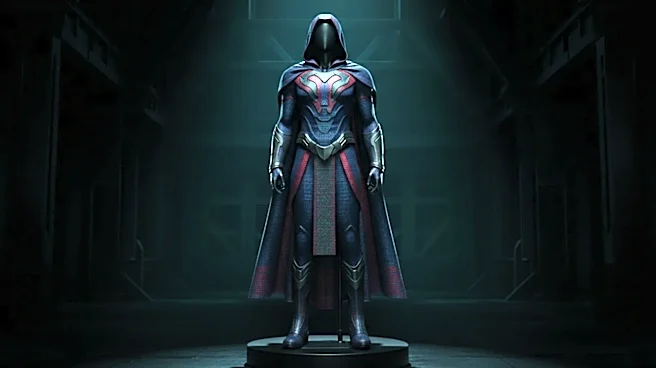
know that an iconic character should be recognizable from their outline alone. Think of Batman's cowl, Mickey Mouse's ears, or the distinct shape of Marge Simpson's hair. This instant readability is crucial in a visually crowded space. A strong, unique silhouette cuts through the noise before the eye even begins to process color or texture. If a cosplayer’s form is muddled or indistinct, blending in with the people standing next to them, all the intricate beadwork or perfectly weathered armor in the world won't matter from a distance. The brain, seeking to make sense of the visual overload, will simply move on.
Color as an Instant Story
Once a silhouette is established, color does the heavy lifting for storytelling. A clear, limited color palette acts as a powerful visual shortcut, conveying mood, allegiance, and identity almost subconsciously. Consider Spider-Man's heroic red and blue, the X-Men's team uniform of blue and yellow, or the instantly villainous purple and green of The Joker. These aren't random choices; they are deliberate color stories that have been refined over decades. When a cosplayer nails this, they are tapping into a shared cultural language. A group of cosplayers in the distinct red and black cloaks of the Akatsuki from Naruto is immediately identifiable as a unit, their theme understood without a single word. This is far more effective in a crowd than a costume with 20 different shades of brown and grey, no matter how detailed, because a simple, high-contrast palette is easier for the brain to process at a glance.
The Trap of Excessive Detail
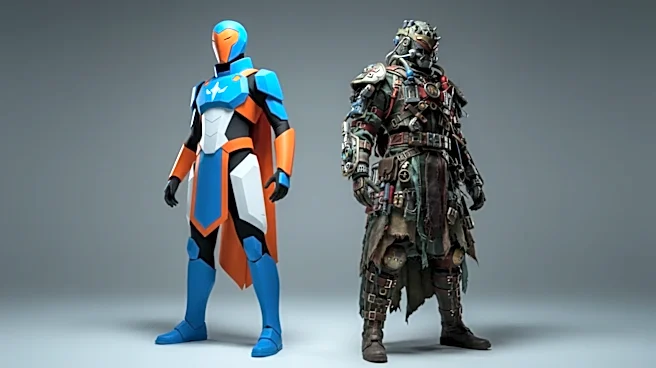
This isn’t to say that detail is bad. The incredible craftsmanship seen in the Comic-Con Masquerade, from hand-stitched embroidery to complex 3D-printed armor, is an art form in itself. However, there’s a difference between detail that serves the design and detail that becomes visual noise. From a distance, intricate textures and subtle color gradients merge into a single, often muted, form. The human visual system struggles with peripheral detail, tending to generalize what it sees based on the central point of focus. In a crowd, a costume covered in tiny, complex patterns can look less impressive than one with three bold, clean stripes. The finely wrought details are best appreciated up close, in a one-on-one interaction or a dedicated photoshoot. But for making an impact on the convention floor—where thousands of people are scanning the environment constantly—clarity trumps complexity almost every time.
Designing for the Environment
Ultimately, the most successful cosplays are those designed with an awareness of their environment. A costume intended for a stage competition like the Masquerade might prioritize fine detail that will be seen on massive HD screens. But a costume for the main floor needs to function like a billboard. It needs to be immediately recognizable, visually striking, and photographable from multiple distances. This is why a classic, well-executed Superman or Wonder Woman cosplay will always turn heads. The design is iconic, the silhouette is unmistakable, and the primary-color story is heroic and clear. Cosplayers who understand this aren't just recreating a character; they are acting as real-world character designers, translating a 2D or digital creation into a three-dimensional space and making the smart choices needed for it to stand out and connect with hundreds of fellow fans at once.