




The Ultimate No-Win Scenario
To be caught "between Scylla and Charybdis" means you're facing two terrible options, where avoiding one danger pushes you directly into the path of another. It’s more than just a tough spot; it’s a strategic dilemma where some form of loss is inevitable.
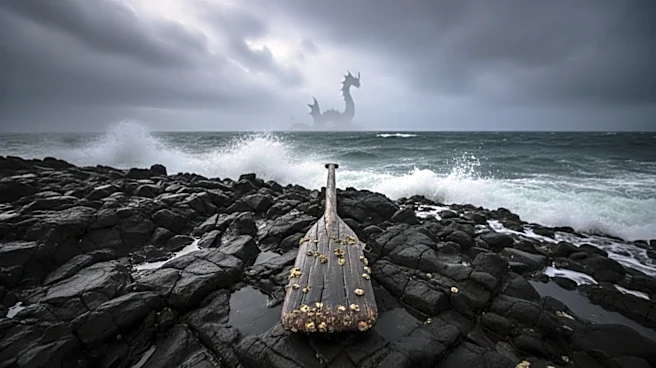
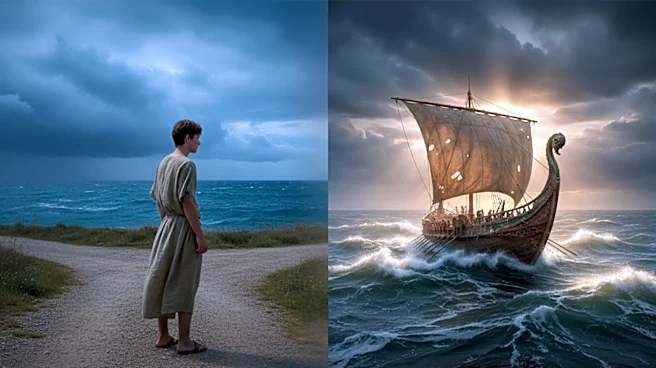
The phrase comes from Homer's epic poem, The Odyssey, and it describes one of the most harrowing challenges the hero Odysseus faced on his long journey home. The setting is a narrow strait, today widely believed to be the Strait of Messina between Sicily and mainland Italy, a passage so tight that no ship could hope to avoid both of the monsters that guarded it.
The Monster on the Cliff: Who Was Scylla?
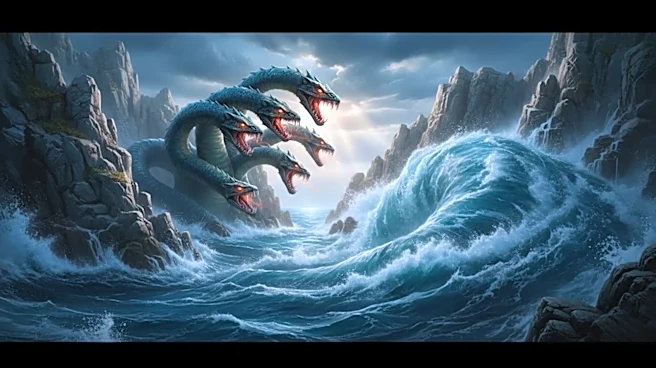
On one side of the strait, hidden in a high sea cave, lived Scylla. While some later myths imagined her as a beautiful nymph transformed by a jealous sorceress, Homer's account is pure nightmare fuel. He describes a monster with twelve dangling feet and six impossibly long necks, each topped with a grisly head. Each mouth was lined with a triple row of shark-like teeth. As ships passed below, Scylla would strike without warning, her heads darting down to snatch sailors from the deck. The danger she posed was specific, calculated, and unavoidable for those who strayed too close: a guaranteed loss of part of your crew.
The Whirlpool Below: And Who Was Charybdis?
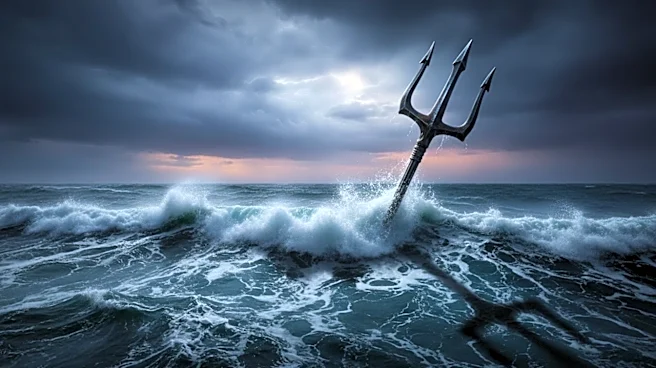
Opposite Scylla's cliff was an even more catastrophic threat: Charybdis. Unlike Scylla, Charybdis wasn't so much a creature as a force of nature personified. Lurking beneath a fig tree, she was a monstrous whirlpool who, three times a day, would swallow the sea itself, sucking down ships, water, and anything else in her grasp. Then, she would vomit it all back up in a churning, boiling fury. To sail near Charybdis was to risk total and complete annihilation. There was no partial loss—only the chance of losing everything.
Odysseus's Impossible Choice
Before he reached the strait, the sorceress Circe laid out the grim decision for Odysseus. She warned him that he could not fight Scylla, an "immortal evil." Instead, she gave him cold, hard strategic advice: sail closer to Scylla. Her logic was brutal but sound: "Better by far to lose six men and keep your ship than lose your entire crew." Odysseus, a leader responsible for his men, had to consciously choose a path that guaranteed the horrific death of six of his companions to save the rest. As his ship passed, distracted by the terrifying sight of Charybdis, Scylla struck, seizing six of his best men and devouring them as they screamed his name. Odysseus later called it the most pitiful thing he had ever seen on his travels.
More Than Just a Rock and a Hard Place
While we often use "between a rock and a hard place" interchangeably, the Scylla and Charybdis dilemma is subtly different and far more strategic. A rock and a hard place implies being stuck with no good options. Navigating Scylla and Charybdis is about making an active, agonizing choice between two distinct types of failure. It's a leadership test, forcing a decision between a definite, quantifiable loss (losing six men) and a probabilistic, but total, catastrophe (losing the whole ship). This forces a grim calculation: which loss can you absorb and still complete the mission?